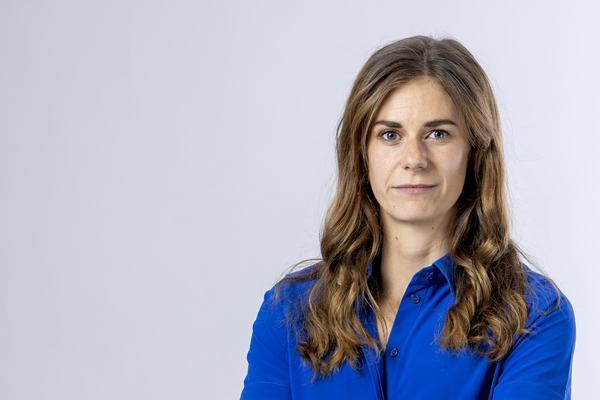
Rebecca Newman
Your IP strategy should be a C-suite priority because it dictates so much of the value and the trajectory of your company. So that will then flow down to how you use other people's IP and how you train the team on that. And it will also flow down to the ways in which you create your own IP.
Carly Gulliver
What are people talking to their lawyers about when it comes to tech? Welcome to Inside Tech Minds from Addleshaw Goddard. In this podcast, we're sitting down with technologists, investors, business leaders who are at the heart of the biggest tech deals, innovations and disputes. I'm Carly Gulliver, let's dive into today's episode.
Hi Rebecca, it's brilliant to have you on today's episode of Inside Tech Minds.
Rebecca Newman
Thanks so much for having me, Carly. It's been a fantastic podcast so far.
Carly Gulliver
Thank you. That's very kind of you. Well, we've covered lots of areas, but we're yet to cover IP. So, I'm really looking forward to getting into this with you, Rebecca. So for our listeners, I'll just give a quick intro to you because there's lots to say. So you're a legal director at Addleshaw Goddard and you work across all contentious IP. You've developed a subject matter expertise in copyright, including AI, design rights, and unregistered rights. This has been recognised by clients and practitioners who come to seek your advice, training and thought leadership in this area. And I've got to say, Rebecca, this is actually how I came to learn about what you're doing because I was seeing you pop up everywhere, all over media commentary, LinkedIn and press articles. So it's brilliant to have you here today.
Rebecca Newman
That's a very generous intro. You can do that intro for me anytime. Thank you. I've really loved being able to kind of really get into the niche areas of IP and disputes that particularly interest me. And I think, you know, I always go around saying we do have the best job. It's the most interesting thing.
Carly Gulliver
And what sort of thing, Rebecca, do you do on a day-to-day basis?
Rebecca Newman
I work with a real variety of clients, so from tiny start-ups to much bigger brands. And on a day-to-day basis, I tend to discuss with them what their IP strategy looks like and how they enforce that. So that's, you know, sometimes that's through bringing claims, sometimes they've received a claim or a complaint and they're not quite sure how legitimate it is. And, you know, we discuss the best way to approach it and essentially how they can carry on with business as usual and carry on making their business more valuable.
Carly Gulliver
So that's business strategy when people are not in court. But of course, you are a contentious lawyer, so you are also often seen at court.
Rebecca Newman
Exactly, and that really feeds into it. We always say that your IP strategy does dictate the things that your customers know about you and your little patch of grass that you can ask other people to keep off and then that's how it relates to contentious proceedings because the IP rights that you've protected allow you to stop other people coming into that area and so the same applies vice versa.
Carly Gulliver
And I would have thought as a practitioner that that really helps you because you see both sides of the fence. So when you're advising your clients around strategy, you've seen how that's actually enforced and how some of those arguments unravel or become helpful, I suppose, in a court setting.
Rebecca Newman
Exactly. And for me, because I'm so interested in the creative businesses that I work with, it's all about using disputes or using that forum to be able to get them what they need to run their business well and to make sure their IP is properly protected and continues to be enforced. It's kind of all about making sure that those businesses can run as best as possible.
Carly Gulliver
How did you get into this, Rebecca?
Rebecca Newman
I started off as a teenager super into... I played fiddle, I did a lot of drama and a lot of design. And then I went and did my law undergrad just because I thought law was really logical and interesting. And because I was a bit too nervous to go to music school. And then when I finished that, I took a year off and ran a little graphic design business and then started my training contract. I think a lot of that creative background kind of flowed into my interests. So, I always wanted to focus as a lawyer on how, why we protect creative rights, you why does IP exist and kind of then, playing that out in the courts is such an interesting way to get into the meat of it.
Carly Gulliver
I should think that some of that background that you have there, creative, has really helped you and helped you empathise and think about your clients.
Rebecca Newman
Yeah, I feel like I'm a better lawyer when I really care about the underlying issues and I really care about the businesses that my clients are running day to day. And I always say that I just have so much respect for, well, for all my clients and for someone who has come up in a creative background actually, I didn't have the guts to go and be that vulnerable and put myself out there as someone creating intellectual property. So I have so much respect for all the brands and the businesses across the spectrum that are doing that, whether that's big brands with their own kind of trade marks or software companies or small start-ups, fashion design businesses, the whole spectrum.
Carly Gulliver
And for our listeners who may not be as familiar with intellectual property, perhaps it's not their business area, for example, what do we mean when we talk about intellectual property? Because it's a pretty broad term, isn't it?
Rebecca Newman
Yeah, it's a vastly broad term. It covers a lot of different rights. So, the areas that I specialise in are copyright, which tends to be creative work. So, everything from your kind of dramatic works to software to literary works. And then you've got another bucket, which is design rights. So the shape and configuration of a table, that kind of thing.
And then you've got trade marks which are protecting the things that consumers recognise. So, you know, for example, something that you as a consumer use to tie a product to a brand. Then you've got the kind of patents sphere, which is much more based in scientific innovation and lots of kind of little ancillary rights. So know-how and trade secrets, they're all sometimes grouped into IP as well. So, it's a very broad church.
Carly Gulliver
It sounds like it. From a tech perspective, given that we're on Inside Tech Minds podcasts, what should tech businesses be looking to protect mostly of that big shopping list? Are there some which jump out or is it really everything within that list which is often relevant to them?
Rebecca Newman
It'll often be the software copyright that will be very relevant to what tech businesses are doing. But it's worth noting that's wrapped in a trademark, right? So if you are a consumer-facing business, you're putting a trademark out there to the public and that's what they recognise you by and that's what they recognise all your good work by as well, all your goodwill accrues to that trademark as well. You do have to look a bit broader than perhaps you would initially think.
Carly Gulliver
That's some really interesting points. So what we're saying is that yes, there are some obvious areas that you might associate with a tech company, but tech companies are still businesses and within that business war chest you have your usual things such as trademarks that you still need to protect.
Rebecca Newman
Exactly. And you'll also be looking at things like confidential information and trade secrets as part of running that kind of business. And it's really kind of standing back and thinking, what is our secret sauce? And getting really clear on that at a top level and letting that dictate your business, because that will end up dictating what your customers know you for and essentially what you can monetise as a business.
Carly Gulliver
So, I mean I think we can come back to that, Rebecca, but during the introduction I mentioned that I'd come to hear of you from the things that I'd seen in the press and on LinkedIn and actually I've spotted, you know, various quotes that you've made about intellectual property, but also in particular the Getty case. So, I know that you were in the courtroom listening into the Getty case eagerly as it was unfolding, can you tell us a bit about the Getty case and how you got so involved with the coverage and the media interest on that.
Rebecca Newman
Absolutely. And I think the story started a few years before the Getty case when I started being aware of these foundation models coming onto the market
Carly Gulliver
Rebecca, just to stop you there, what's a foundation model just for the, you know, a noddy question.
Rebecca Newman
Yeah, so what I was mainly looking at was large language models. So, you know, what you would think of as the models that underpin a generative AI model. So you might have something built on top of a foundation model, but that's your kind of big base model that's been trained on billions of tokens. But I started thinking about these a few years before the Getty case came out. And I must say, like, I'm not from a software background, so I had to do quite a bit of reading and I still, every day have to do quite a bit of reading to kind of understand a bit more about how they work. And I was trying to pin that across to copyright law and what I knew about copyright law. And I was getting a bit confused because I was thinking, you know, I could see the way that these models have been trained on billions of works and I could see what's being outputted kind of at that time, which was quite a few replicas of the works that I'd been trained on.
And I was a bit confused that nobody was talking about the legal implications of this and the fact that actually this might be a breach of copyright law. So you fast forward a few years and the Getty trial is listed, it comes along. And I think from that past history, I was just so interested in understanding how would this play out in the courtroom? Like, what was actually going to go on day to day? What was the judge going to think of the arguments? Actually, how were the arguments going to be made? You know, particularly by people with more of a software background. Like, what were the experts going to say? So I just was geeking out really. So I just, I just turned up every day.
Carly Gulliver
And this was in the High Court.
Rebecca Newman
Yeah exactly.
Carly Gulliver
So you went to the High Court and then tell us a bit about the case and what it is.
Rebecca Newman
Getty is your stock images provider and they're actually really well positioned to bring this case because obviously they've got a huge library of creative works, but they're also very well-funded to bring a case in the High Court and a case of this complexity does require a huge amount of funding behind it. And that's part of the reason why we've not seen that many of these cases. But Getty was contesting a model called Stable Diffusion, which many of you will have heard of. They were concerned that Stable Diffusion had been trained on a huge amount of their stock images and was also capable of outputting those stock images. There was also a trademark claim, but we'll just park that for now.
And I think the big takeaway from the High Court case, so the first case that was last summer, Getty didn't have that evidence that Stable Diffusion had been trained in the UK, and they had to pivot their strategy halfway through the first instance trial. So, what we did end up with a ruling about models trained abroad, in this case in the US and then offered back into the UK. So the first instance judge essentially said, you have a model trained abroad, even if that training involves using UK copyright works without permission, it is still okay to offer that resulting kind of end product back into the UK. And that gives me cause for concern that there is this kind of loophole in UK copyright law that just allows people essentially to use UK copyright works abroad, offer the resulting product back in the UK and not have to pay or, you know, pay for or acknowledge any of that creative effort. So, I'm really interested to see what the appeal judge on the Getty case says on this point and hoping that there's an appeal trial date at the end of this year.
Carly Gulliver
So essentially the case was about the Getty which has all these images and its concern that its images and content was being used without its permission to train the model of Stable AI. So I expect with the increased use of AI that we're going to be seeing a lot more of these types of claims, particularly as you said that it doesn't sound as if it's been completely resolved yet.
Rebecca Newman
Exactly. And we are, we're waiting on kind of a second opinion from the Appeal Court. And I think what's a little bit tricky at the moment is the law is, it feels to me like the law is in flux because I think there is a very good argument that models trained in an infringing way abroad shouldn't be able to be offered back into the UK. But that has such a huge impact for UK businesses. You know, we are all becoming more AI native, you know, whether we're an application layer business that is building on a foundation model and relies on that for our customer facing product or whether we're a retail business that is using a foundation model as part of a customer service offering, for example. AI is becoming more and more built into our businesses. And I worry that it is becoming kind of too late to change the approach to this. But I think we'll talk about this later but some recent comments from the Australian Prime Minister have given me hope that it's kind of not too late to change the narrative on this.
Carly Gulliver
So, in terms of the Getty case, what should businesses take from that?
Rebecca Newman
It's just having that awareness that we are slightly on shifting sands at the moment. And although AI will be entirely built into your business and you know, that's the way we have to operate at the moment, it's just having that understanding that, you know, as we move forward over time, there might be a requirement to be more open about the way that AI models are trained or essentially pivot to using cleaner foundation models. And I think if I was giving takeaways, particularly to sort of application layer businesses in the UK, it would be not to repeat the past sins of the big foundation model providers and you know, when you are doing fine-tuning on a foundation model to offer a specific product, actually just to be really careful and to attribute and acknowledge the value of the works that you are using for that fine-tuning. So, you know, for example, you might be using like academic articles, you might be using, you know, additional documents that really make your offering specific and tailored and exactly what your customers want. And I think recognising that value and attributing those creators and giving them a fair share of that value is for me an important takeaway from where we are after the first Getty trial.
Carly Gulliver
So, if you are a business leader or you are in a department within a business which is looking after intellectual property, it sounds as if you should be taking responsibility for policing this to make sure that you don't fall on the wrong side of IP infringement law, particularly in the context of AI use.
Rebecca Newman
Yeah and I think it really depends what your business does right. So, if you're an application layer business you are thinking about having those right permissions for the IP that you're using. But many businesses won't at all be thinking about that and it'll be more for them about thinking around if I use AI to create for example marketing materials how much of that can I protect and having a good understanding of how much of that can I protect. And having a good understanding of what your business assets are, particularly when your team is using AI. So, it'll be more like questions like that and also questions about kind of the risks of infringing other people's IP. So, you know, if your teams are using AI models, how much do we have to think about other people's IP? So it'll be more kind of a user-focused rather than a developer-focused perspective.
Carly Gulliver
And whose responsibility is that within a business?
Rebecca Newman
I think it's a C-suite responsibility and I think it flows from the fact that your IP strategy should be a C-suite priority because it dictates so much of the value and kind of the trajectory of your company. So that will then flow down to how you use other people's IP and how you train the team on that. And it will also flow down to the ways in which you create your own IP.
So, if you're say a content business and you're creating blog posts, actually it will flow down to the advice that you're giving your creation teams about their use of AI. So you'll be talking to them about the importance of human input and the importance of keeping a record of that human input to make sure that you can evidence copyright because that's your important IP right. That's where your value is generated in your business. So, you're careful about that. And I think that that tone has to be set from the top.
Carly Gulliver
What would you say to businesses who are concerned about potentially the cost of that? Because take Getty, for example, you made the point it had huge funds and resources in order to be able to bring this claim. But many businesses, many of our listeners won't have that level of resource available. You know, is it worth it for them?
Rebecca Newman
Well, I guess there's two questions there, right? It's, you know, the Getty question about is it worth it to litigate and to get an answer, which I might just park for now, but I guess the other part of that question is, is it worth it to make this a C-suite priority and to spend the time and money on it? And I think I would say yes, because it makes sure that you don't have to rectify any issues later. If I can give an example about having that strategy aligned. So we helped Dryrobe in their High Court case that they won last year and part of the reason that they won that case was because they had a really clear understanding of what their kind of hero IP is. So, they were getting challenged on the fact that people were using the word Dryrobe descriptively to refer to a whole spectrum of changing robes and they were able to robustly push back on that by essentially saying, yes, we know that's happening, but we are very clear that this is our brand, this is our brand name and it only relates to our product. And we've been writing to people for the last however many years to make them aware of that. And that consistent vision really supported them in getting the result that they wanted.
Carly Gulliver
One of the comments I read that you made in The Guardian, when you were reporting on Getty, actually, is that The UK's secondary copyright regime is not strong enough to protect its creators. What did you mean by that?
Rebecca Newman
That's such a nerdy comment, isn't it? And it's quite a complex regime, but it's just the thing I was referring to earlier about this kind of idea that at the moment, the way that the first instance decision in Getty was decided, you could make an AI model outside the UK. You could use a whole load of UK copyright-protected literature and art and music to train that model. So essentially extract value from those works abroad without paying for that value. Then compile that product abroad and offer it back to UK consumers to compete against those original artists without any repercussions. So that's kind of where I'm coming from when I'm saying if UK copyright law doesn't stop that from happening, it is not adequately protecting those original creators. It's not making their livelihood viable for the future.
Carly Gulliver
So there's a lot of consultation going on at the moment, isn't there, in the UK around copyright? And in particular around how it's impacted by AI. Do you feel like there could be some hope in terms of what the latest consultation is on that?
Rebecca Newman
I think it's really good that this is a priority for government and it's clear that there are a lot of task forces and energy within government being directed at this right now. And I think that is a fantastic step in the right direction. I think what we need in the UK is a little dash more boldness about standing up for creators. And I think it's really important to recognise that that doesn't mean we're anti-innovation. It just means that we want to give our creators and our creative industries enough that it will incentivise those industries to continue for future generations. And that doesn't necessarily prevent us from being innovation forward. And I've been talking previously about the amazing kind of application layer businesses that we have in the UK. It feels like we're such a hub for those businesses, those kind of really innovative and interesting ideas being realised within the UK. And I personally think both of those can sit together.
Carly Gulliver
And so would you like to see us move more towards a European-type regime?
Rebecca Newman
I do think the way that Europe has come out on this is bold and I respect it. So, in the EU AI Act, there was that really clear statement that you've got to respect EU law. I think it's Article 53. Basically, if you want to play here, you've got to respect our copyright law. And similarly, the Australian Prime Minister has just come out and said something to the same effecs, essentially, that our laws will be very clear that creators should have control over their works and ownership over their works.
Carly Gulliver
I can hear that you're so passionate about IP and creativity and I was reading another one of the quotes that I saw from you online that you said, I love IP because it enables creators to be brave in a world where it takes courage to make change. I work with clients to leverage the value of their creative and brand assets in a way that suits their business. So clearly this is something you're really passionate about, and you've just spoken around how you know, shifts towards the AI Act and what we've seen in Europe could be really helpful in terms of protecting content creation. So what do you think the future of content creation and IP protection looks like in this AI generative world that we live in?
Rebecca Newman
I think that technology has always informed the development of IP, you know, right from the printing press to the invention of the camera. There's always been kind of this synergy where they influence each other and I think that's not necessarily a bad thing. And I think that many of the developments that we're seeing in technology will influence the direction that our creative industries take and ideally also they will make our creative products better. So if you think of like Adobe Studio, that's an amazing tool for creators and that leverages advancements in technology and leverages AI. So I think in the future we will see the creative industries being adaptive as they always have been and sort of flourishing to meet a new user demand.
Carly Gulliver
So, do you think that the regulations and the enforcement can keep up then with the rate of change that we're seeing?
Rebecca Newman
I think it's very helpful if it's led by a clear line from government because, you know, the courts are interpreting these statutes and it flows down, right? So if you've got a clear line what the policy behind our law is and should be, then that flows down and it allows creators to know where they stand. And it also allows innovative businesses to know where they stand. You know, there's always this conversation as to the extent of permitted competition and what respecting creative rights looks like and what inspiration looks like. And I think if you do have a clear idea of what you're trying to achieve with IP law, it's easier for it to keep up as the world evolves.
Carly Gulliver
So at grassroots, what should business leaders be thinking about if you know if they pick up the phone to you and say, I'm starting something up, I've got this really cool tech service or product, how can I protect this? How do they start?
Rebecca Newman
I sound like a broken record, but I think being really clear on where your value is generated. So what are your important assets? You know, what's important for you from an IP perspective? What do you want to be able to prevent other people from trampling on? And just to give an example, my partner's business creates learning resources for kind of the SQE and the SAT and stuff like that. And we were having an interesting conversation. I saw that their business produces an amazing amount of incredible learning content. But actually, they don't want to protect that content. They put it out there and they're happy for other people to use it and springboard off it. What they want to protect is the way it's delivered, which is informed by learning science. So they have this really clear vision of what they do and don't want to protect and what kind of drives the value generation and the reputation of their business. And I think sitting back and getting a good idea of that at the start will avoid you applying money in the wrong areas and it will let you take that money and apply it to the right area. So actually, you are protected when the need arises.
Carly Gulliver
So as with everything, it comes down to business strategy. Think about, what are your crown jewels and then we can help put a framework around how you set about protecting that from a technical perspective.
Rebecca Newman
Yeah, that is spot on. I think there's such a temptation, especially if you're starting up, to think, you know, there's so many things to think about when you're starting a business and to think, okay, IP is a second-order consideration that I'll think about a bit later. And yes, you know, much of the IP protection will be a second-order consideration, but actually thinking about what am I going to care about? What am I going to be looking to protect? That will form the very foundations and the fibre of your business. And if you're clear on that at the start, it will really serve you through the lifetime of your business.
Carly Gulliver
When we spoke earlier about some of the challenges we're seeing in the UK around regulation of IP protection in the context of AI and copyright, and how we're seeing some different approaches being taken in the EU, are there any other countries that are standing out to you as trailblazing, if you like, in terms of protection of IP?
Rebecca Newman
I think I would go back to that example of Australia. Given the geopolitical climate, I think it is very bold for the Australian Prime Minister to say that he stands behind creators and he champions the value of artistic works.
Carly Gulliver
And do you think that with that sort of approach they stand a chance of getting good balance between innovation and protection?
Rebecca Newman
It's a question that I've been grappling with and I don't feel equipped to answer that question. I speak to so many creators that are so passionate and, you know, have this real sense of violation that their value in their works has been stolen and they've not been recognised. And then I also speak to start-ups and tech businesses and people who are saying we need to move forward and we need to be able to innovate and we can't let the way that we did things historically prevent us from making these amazing leaps in innovation and technology. And I can completely understand both of those two viewpoints. And I am still in my mind trying to conceptualise this future where they both sit together. And I think the closest I've got is this idea that technology will shape the demand that is coming from consumers of creative content and that the creative industry will hopefully flourish in response to that demand. But that's the closest I've got.
Carly Gulliver
Well, it's not an easy answer. I don't think we'll find the answer to that on one podcast but something that jumped out to me was just the breadth in terms of this is obviously impacting all companies from smaller companies but also some, you know, real global companies. Because we recently saw quite an interesting case of Apple and OpenAI.
Rebecca Newman
Yes. I think that case really shows the importance of, you know, this, I've been saying all along is, is knowing where the value is, right? Because it's a trade secrets case and actually two parties that used to work together and now, you know, in a dispute with each other. And that is because when one company violates what you see as kind of the core of where your business is generating value and that those kind of secret aspects, that patch of grass I keep coming back to that you want to keep other people off, then actually that is where those disputes arise.
Carly Gulliver
And this is where Apple sued OpenAI because of some employees who moved from Apple to OpenAI and the issue there was that the employees were you know, there was a claim that the employees had taken or used, exploited some of the intellectual property of Apple in their new home. Is that right?
Rebecca Newman
That is absolutely right, as far as I understand it.
Carly Gulliver
So presumably that's something for business leaders and C-suite to think about in their own businesses when they're taking on employees from other companies?
Rebecca Newman
Yeah, it's a really key consideration to understand when you're taking on an employee, what their obligations are to their old employer, what their employment contract says, and having an open conversation about what they understand might constitute confidential information or a trade secret in the context of their old role and what they might be limited about applying in their new role.
And having that open conversation upfront means that they don't feel pressured to do something that they're not allowed to do under their old contracts. And you don't feel like, you know, you're able to get the best out of that employee as a new employer.
Carly Gulliver
And how can you protect innovation and these secrets when it's in some inside someone's head? So, you know, if you've got an employee who's been doing all of this rock star tech development and they move, how do you protect that?
Rebecca Newman
It's an age-old question and it kind of comes back to this, you know, what in copyright law is kind of called the difference between ideas and expression. And you can't protect ideas, right? So you can't stop somebody reformatting their idea or re-expressing their idea in a new job. But what you can stop is them taking documents where they've expressed that idea in their old role and bringing those across to the new role. And that sounds, I mean, even as I say it, it's such a fine line. It's a very difficult line to kind of balance.
Carly Gulliver
So we've spoken a lot about impact of AI, copyright infringement, what the regulation landscape looks like. And we've also spoken about what businesses should be thinking about when they're both creating IP but also protecting IP. What haven't we spoken about, Rebecca, that you think should be on the mind of business leaders in tech?
Rebecca Newman
One point that I did just think about from your great question that you just asked about what can we protect and what can't we protect is that that nice example of the employee is quite helpful to understand this debate between the AI model providers and the people whose works have been used in training because what I'm hearing and what I understand from the model providers is this idea that actually, we haven't taken your exact protected expression. So we're not retaining a copy of your photograph. We're actually just extracting some of the information from that photograph to inform the way that our model operates and we're doing that billions of times over. As a result, that shouldn't be prevented by copyright law. So this whole AI debate that we've been talking about actually really kind of runs along the tram lines of one of the most central issues in copyright law. So it's just a nice way that that brings it back together, brings it all back to kind of the reason why copyright law exists.
Carly Gulliver
What developments in IP, copyright or AI are you watching most closely, Rebecca?
Rebecca Newman
It'd be remiss of me not to say I'm really looking forward to the Getty appeal judgment because I think it will be such a huge issue for UK copyright law and also for the future of foundation models in the UK. But I'm also really interested to see what the new government and the new cabinet will do and whether they will come out with a bit more of a clear statement as to how the UK is positioning itself and what future laws, if any, might look like in this area.
Carly Gulliver
So you're very interested in what the future looks like in terms of the regulation and evolving legal landscape and what that will mean for businesses?
Rebecca Newman
Exactly, because, you know, law evolves, it's dynamic and it shouldn't just stay still. And our Copyright Act is fantastic and actually I don't think it needs amending as such, but the way that it applies, it evolves. And actually that's what we are going to be hearing about in the coming months and years. And I'm really looking forward to seeing how that develops.
Carly Gulliver
We spoke a few times about cross-jurisdictional cases, if you like, and obviously lots of businesses are international. So, what should a company be thinking about when they are doing cross-border transactions in terms of how they protect their IP? Because we've already spoken about quite a few different regimes and how those don't match up.
Rebecca Newman
Yeah, it's a really interesting point because obviously many of the rules that govern the way that IP is protected and enforced were, you know, they were made in a time that was less, that, you know, there was less cross-border sharing of ideas and information. So, they're more designed for a time where it's easier to contain the flow of information. And as we kind of move into this new era, where cross border dealings are so much more than norm. And I think it is really important to think about the hygiene of your business in that context, because it will fall on each individual business to respect the relevant IP rights in the particular territories.
And it actually just made me think of this case that has recently been decided about Anne Frank's diary and VPNs, which are two things you would not usually hear together. But you know, Anne Frank's diary is a copyright work and copyright is protected for a certain amount of time after the author's death and sometimes that differs between territories. So it's protected in some territories but not in others. A dispute then arose about the fact that it was offered publicly in a territory where the diary was a public domain work, so free to use. But then users in a territory where it wasn't free to use were accessing it via VPN. And the discussion here was around is it enough to put in a measure so that the company that had made the diary public had put in a geo-blocking measure? And the court was considering like, is that enough when we all know that people can get around that with a VPN?
You know, the suggestion from the court and it wasn't a final decision, but the suggestion was maybe that's not enough. And actually it is on businesses to think and to appreciate the cross-border nature of their communications and of their use of IP. And the judge was really backing that up. He was essentially saying, no, when you're communicating that work, you've got to think about that. You've got to think about the fact that different regimes apply in different territories and it's on you to act accordingly.
Carly Gulliver
Well I was going to ask you about that actually. What should CEOs, GCs, CTOs and brand leaders be thinking about now? So that's one point around the international nature of IP creation and protection. What else should be on their checklist?
Rebecca Newman
I would just go back to this party line that I've kind of been repeating throughout is get a cup of tea, sit back and think, where is my value being generated? And the answer to that question will give you a lot of insight about what your valuable IP is, where your valuable territories are and then where you need to invest, for example, invest in the advice to get that right or invest in the IP protection that you need, whatever it is, I'm not prescribing what the right answer is, but going through that thought process will really serve you well the earlier you do it.
Carly Gulliver
So worth an IP audit, go through what you have, potentially what you have that you don't need, what you had that you want to protect, and then you can work out how best to go about that, thinking about in what jurisdictions that would be relevant.
Rebecca Newman
Exactly. Couldn't have put it better myself.
Carly Gulliver
Well, it's been so great to speak to you, Rebecca. Before you go, I do like to ask my guests what piece of tech they would put in the AG Tech Time Capsule. What's your piece that you're taking with you?
Rebecca Newman
If it was for the amusement of future generations, then I might be tempted to put a recording of a Teams meeting in there because we still can't get it right, can we? The amount of tech we've got available at our fingertips and the fact that we all still stay on mute. So that's what I would put in.
Carly Gulliver
Oh, that is a very good point. I always start my meetings on mute and have to beat that chorus of people telling me that I am on mute. Well, great. It's been really good to speak to you. Thanks so much for your time, Rebecca.
Rebecca Newman
It was such a pleasure. Thanks, Carly.
Carly Gulliver
Thanks for joining us on today's episode of Inside Tech Minds. If you enjoyed the conversation, don't forget to follow and subscribe on Apple or Spotify or even leave us a review. Thanks for listening and we'll see you next time.