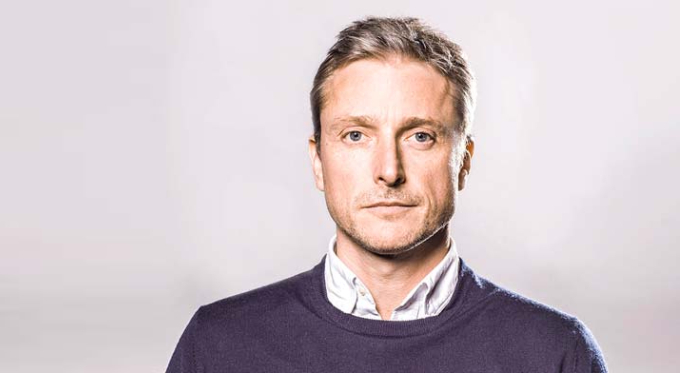
Jeremy White
Quantum computing, as it gets better and better and better, they talk about it being Q Day, like quantum day. It's going to come a lot sooner than people realise and obviously it is intrinsically linked with AI too. This is where the massive, massive advancement in robotics is going.
Carly Gulliver
What are people talking to their lawyers about when it comes to tech? Welcome to Inside Tech Minds from Addleshaw Goddard. In this podcast, we're sitting down with technologists, investors, business leaders who are at the heart of the biggest tech deals, innovations and disputes. I'm Carly Gulliver, let's dive into today's episode.
Today we're joined by Jeremy White, the senior innovation editor at the very well-known tech publication WIRED. He's spent over two decades at the frontline of tech change, and I'm sure many of our audience would have read your reporting over the years, Jeremy. So I'm really looking forward to getting into this. Jeremy, so I just alluded to some of your career there and how you've got to where you are, but tell the listeners who you are and a bit about your career journey to date.
Jeremy White
It's lovely to be here, by the way. I'm that generation that grew up with the first home computers really. So we're talking the ZX Spectrum from 48K, going through to the first game consoles. I remember my grandparents, we got given one at the Christmas that Atari games console came out with the cartridges and the big single joystick with the red button on it and I was the first generation where this sort of stuff came into people's homes nd it grabbed me. And so this is where my love of technology came from. And it's very common in the world of technology reporters that home gaming is where they get into it and that sort of thing. So as I grew up later when I left university and started working, I started on the side doing games reviews for magazines and things like that and that's where you get into eventually. And all of a sudden you do start to start writing about the technology and the hardware, and then moving on from there. And then it grows naturally from there organically. And I became the technology reporter and journalist for Esquire magazine. And then moving on from there, I went to the Financial Times. I went to there to be a digital editor at the Financial Times. And that's what got me the job on Wired. I've, you know, was in those positions quite a long time. And what was interesting about that, during this period where the internet was exploding and also where technology was coming in. But this idea of being a journalist also started before then, weirdly, within not the technology area. Because I always wanted to write. My first job in journalism was actually as a legal journalist. So I was at Euromoney Publications and I was working there and we started a magazine called World Law Business and this was a magazine about the business of running a law firm, not the law. And so this marriage of legal journalism and then technology journalism and then just moving further and further into technology is how I ended up eventually at WIRED. This idea of getting into the detail, that all came from my legal journalism days.
Carly Gulliver
It's really interesting actually, Jeremy, that you say that because I think sometimes there is a piece around depth and lateral thinking which can actually take you from one place to another. When I think back to my own career, what actually made me interested in tech, because obviously I'm a lawyer, not a journalist. I'm a, you know, in my spare time side quest with this podcast, if you like. But I actually had a supervisor when I was a trainee who had been a tech journalist And I used to sit next to him and write a newsletter at the time that he used to supervise and we used to send out to the clients. So actually through his love of writing and his prior career, that really got me interested in tech. And then I layered that over the top of my legal career. So I can completely relate to how these things can mesh really nicely and actually be quite pivotal in terms of what your career starts to look like.
Jeremy White
Interestingly, the funny thing about when you're writing for titles like Esquire magazine, which people wouldn't have heard of like that. But the thing is, that sort of journalism, it just comes round again and again and again in terms of like, you know, like every three, four years we'd be writing about the double breasted suit of whether it'd come back or not and things like that. And then after a while you realise if you're in that world and you're on that treadmill, you start to do the same things again and again and again and this is what attracted me to technology. Because it's never the same. It was always moving forward and always getting better and always changing. And that is why when I properly landed a specialism in technology journalism, you would you know, I could never come out of that now because it's always about what's next, what's new, what's coming after where we are now. And that's far more interesting than cyclical trends to me.
Carly Gulliver
So before we get into, you know, those cyclical trends and where we are now, I'm just gonna pick your brains. I mean, one of the things that most fascinates me about your career, Jeremy, is the amount of people that you've spoken to and you must have interviewed hundreds of the world's smartest technologists, founders, you know, business leaders in companies. Have there been any of those conversations which come to mind which have fundamentally changed the way that you think?
Jeremy White
Yes. I think it is an absolutely fascinating time right now in the automotive industry globally. We have had a hundred years of internal combustion or so. We've gone through the cycle of developing the internal combustion engine, getting it better and better and better. And then we've basically got to the point where it's, you know, practically perfected and now we’re just tinkering around the edges and incremental gains. And now we've gone to the point just now we come to the point where that technology is being superseded by electric vehicles and motor technology and battery technology. And so imagine being a technology journalist just at the point where like a fundamental global technology is right now shifting before our very eyes and happening at this moment. And so it is crazy to think about the level of change that's happening and will be happening over the next sort of 10 years or so. And then you go and interview someone like Jim Farley, who's the CEO of Ford, and these are people that grew up in a industry where it was mechanical, that sort of traditional level of manufacturing, supply chains and, you know, huge manufacturing plants, loads of manual workers and skilled workers, design and developing, and then shipping and then all of a sudden the whole thing gets upended. And these people that grew up in that world are having to learn, at the very top of the profession, are having to learn and have the answers for their thousands of employees around the world saying, Okay, well, this is how we're gonna combat this complete shift in technology that is the the very definition of disruption. And then you've got the Chinese and the Asian manufacturers coming in and eating their lunch and basically coming in and undercutting them in every possible way technologically, price wise, owning their entire stack rather than outsourcing it. And people like Jim Farley have to have the answers to that. And this is when talking to Jim, not only do you recognise that this person is incredibly intelligent and also massively open to this. I mean he's he's gone on record to say that he went out to China and drove, I think it was a Xiaomi SU7 and brought it back to America and he said it was like one of the best cars, you know I think it's the famous quote, he said, I didn't want to send it back. It was that good. And see, that's a very brave stance for someone in his position. He's had a lot of flack for that. But that's the sort of attitude you need from these CEOs. There's no point burying your head in the sand pretending this isn't going to happen. You don't want another Kodak moment. You want these people to say, actually, we can't pretend this isn't happening. We can't pretend pretend this shift is going on. How are we going to completely remodel and restructure our entire industry in order to compete and to cope with this new world that we're moving into? And when you see someone like that, you see them grappling with these fundamental problems. And you look at the problems that Stellantis are having right now financially. You look at the, I mean, Polestar have just had their right to sell their cars in America taken away from them and so they have to withdraw from the US markets. I'd be struggling to find an industry right now that was more visibly being disrupted by technology than the automotive industry. At the very top of it you could see the things they're grappling with and it's absolutely fascinating.
Carly Gulliver
I mean, a big part of our audience are CEOs who are grappling with questions like that across different industries at different scales, but of course from the SME businesses who, you know, are at the backbone of the UK, if you like, to the large scale businesses and global businesses, they're all grappling with these challenges. So if we took your example there, what would be your tips, if you like, to almost reverse engineer this of how should they be looking at the challenge of disruption impacts of tech and reimagining that within their business?
Jeremy White
Well, that's the thing. I mean, if we're talking about SMEs, it's a tremendous opportunity that they're taking place right now and you know, wide charts, these companies that come into legacy industries using legacy technology and genuinely disrupt them and take significant market share. And what's great about this from a WIRED point of view and also from, you know, an SME point of view is that you see these companies coming in and they are very small, very scrappy, and genuinely going toe-to-toe with players that are much larger than them and winning. One of the interesting examples really of this is the aviation industry. This is a very traditional industry. It's like $800 billion industry globally. It's serviced by four or five major global players, huge companies, operating in a very traditional manner. And there are companies that have come into this industry that have completely changed how operates in using visual AI. And you've got people like Apron AI that have come in and they've managed to go to airports and say, we can use visual technology, visual AI to increase the throughput of airplanes coming in and out of your airport, routing them quicker and also monitoring them and going, Okay, well, have you been refueled? Is there anything dangerous taking place here? Where is the quickest route to a gate than or a parking space? Because the airports operate on throughput of airplanes. And you know, this is how they make their money mostly. So massively increasing that. Then you've got companies like Flyer, which are based, I believe, in the Netherlands. And so that a few years ago had 30 people. 30 people. Now it's got a few hundred people. And this is a company that worked out that looking at the way the aviation industry operates say, like, okay, well, it's like 95% of airline fares are still determined today by human. And so they went in and said, okay, well, hang on a minute, not just dynamic pricing, but we can go into airlines and we can say they've got all this data, but it's not clean. We can clean up that data and we can sort out their pricing structures, we can sort out their third party vendors, we can do all of these ancillary services as well. And they just go into the airlines and they say, Okay, well we will take your data and we will make it clean data and they will show you these efficiencies and how to do it, all done through AI. So this is why they're such a small operation. And then they say, okay, well, you know, we will then deliver you demonstrable efficiencies and to the money savings. They are so confident of doing this that unless they deliver a five to ten percent revenue uplift, the airline doesn't pay a thing. So how do you say no to that? They come in and say, we will save you money and if we don't, don't pay us significant revenue. And so no wonder they've been incredibly successful. And the more airlines they do this for, the better they get at it. This used to take them like three, four, five, six months in order to clean up the airline data. Now it takes a matter of weeks for them. And then if the airline doesn't want to work with them anymore, they'd say, no problem at all, fine. Here you keep your data, take our clean data away, and you know, you just go right back to how you were doing it before. It’s a compelling process and that's a small business.
Carly Gulliver
That small business sounds super exciting and I work with a lots of high growth, early stage and start up businesses that are doing brilliant things in tech. With that business and with others that you're talking to, what do you think the sentiment is from, you know, UK founders around what their chances are in terms of the growth of those businesses in in the UK versus, for example, the US?
Jeremy White
The UK market, there's a tremendous amount of optimism right now in terms of AI-fuelled business and going and generating new businesses and also, you know, for smaller players and getting these disruptors into certain industries. The AI industry is, you know, is very strong within the UK, as we know. I think what we're seeing is a degree of optimism, but also hedged with an increased awareness that there are some serious security issues that are coming with these technologies that, you know, that people will all have to be wary of. And so right now you're seeing with the adoption within larger industries and going like, well, how will we actually implement these technologies and how will we actually transform our businesses? But from a generation of new business, we're seeing quite a healthy range of companies that we talk about in wide across an all manner of sectors as well. Not just the automotive, not just aviation, particularly in healthcare.That's one of the areas where I think we're seeing like the most I mean, people have talked about this being the decade of health.
Carly Gulliver
I'm really pleased actually to hear such an optimistic response from you there. And I think, you know, we still have a very great market in the UK to bring along innovation, a promising regulatory environment, all of the kind of university power, talent power. I feel very optimistic, especially when we look at how capital is being deployed, you know, in the UK in interest from acquirers, investors outside of the UK. So I think, you know, that's that's brilliant to hear that that's consistent with your seeing at WIRED.
Jeremy White
Absolutely. As I say, technology is being used right now as a primary driver for SMEs and for even for very small operations, where how can we compete in a world around large legacy industries? I mean, these are the industries that are actually having to find a way of protecting themselves. I know people, for example, that work in the advertising industry and I used to be a cover reporter on campaign magazine myself a long, long time ago and this used to be a world for the major players and that was basically it. And so it was their domain and it was very hard to get into it, you know, it was all like that. Now of course, you're seeing entire campaigns generated by AI. Coca-Cola very famously ran its the last two Christmas flagship above-the-line TV commercials from the States were completely AI generated and some people didn't like them, but it was, you know, this is a turning point when you're getting that sort of thing taking place but now you've got agencies, for example, like Ten Days in London. I think they're based in Bermansey. And these are people that used to be at enormous advertising agencies like Wyden and Kennedy and they used to run like the Nike account and things like that. And now they're a small agency and they're called Ten Days because they're using their skills and also new technologies in order to turn around full campaigns in ten working days. You'll go to a traditional agency and it'll take the two three to six months for them to turn something around. And they're working with bigger and bigger clients. This is what's happening again and again and again.
Carly Gulliver
So do you see in these industries then that there's more opportunity than you know than risk because I suppose creative is a brilliant example of where there are some difficulties around the impacts of AI on creative industries and what that will mean for it. But you've just given a great example of how we have someone who is grabbing that and the value of disruption and actually making that work for their business model.
Jeremy White
Yeah, exactly. You can't pretend these sorts of things aren't happening. And so yes, what it's gonna do is it's fundamentally changing how the larger agencies are having to operate. But it also is allowing smaller operators to come in. And as I say, it's democratising these things. I mean, this is what I keep seeing in different sectors, like in the automotive industry as well, but also in the healthcare sector and in the advertised sector, and as said in the aviation sector as well. These sort of technologies have a democratising effect. They're allowing smaller operators to go toe-to-toe with sizing of companies that they would never normally be competing against and so there is an enormous amount of opportunity here. But the interesting questions are being asked of the larger operations. And you're like, okay, well, how are you going to change? What are you going to do to stop these people who you felt that were incapable of competing with you for contracts and for clients? Now they can and so these are the really interesting questions we're seeing at WIRED again and again. That's why it's interesting from a startup point of view, because it's like you can suddenly do things that would weren't possible fifteen years ago, ten years ago. And you can compete in a field and a level, but that as a downside for the legacy major players.
Carly Gulliver
So I was just about to ask that actually. So obviously startup, brilliant. You don't come into something with all of that legacy to work through. So you have the opportunity, potentially with some capital, with some brilliant minds who probably are experienced professionals, going in and starting something from scratch. We've seen that model working across various industries. But how about if you were in a more mature business or a global corporate and you are a business leader? And you have all of these legacy systems and you're sat there thinking, right, I need to be doing something with AI, but how do I shoehorn it into my existing systems?
Jeremy White
Yeah. I get that a lot. We get that a lot. And the real nub of it there, you're touching upon it, is the C-suite, the executive committee, going like, okay, well, you've got a number of different approaches. Probably the most disastrous approach is when the C-suite, CEO, or the managing partner or whoever goes, we need to be using AI, go ahead and use it. And they seed that responsibility of actually doing it and that sort of level of digital transformation for the business, whatever industry it's in, they just go, okay, well I don't understand it, but just go away and make it happen. Make sure I can go back to the board or whoever and say, yes, we're doing this. That is the most disastrous way to go about it from you know from the many cases that WIRED's obviously looked at over the years. The way it really works is there is no getting away from the fact that the very top levels of any business you're in doing, trying to do this, has to get their hands dirty. They have to get involved. They have to understand it. But more crucially, there has to be a willingness within the business in order to restructure. How would you build a law firm now, large law firm now if you were starting from scratch? It would probably be fundamentally different than how you would build a large law firm operating in multiple different jurisdictions, you know, if you set it up twenty, thirty, forty years ago. And so then you're in a position of going, okay, well, do we try and shoehorn this technology into our existing management structure and existing sort of day-to-day working practices? Or do we, which is the predominant way people do it and obviously you can understand why, because it's less painful. Or if we were starting again, which is obviously how disruptors come in and these like smaller businesses come in and say we're starting now, we're just going to leapfrog legacy technology, leapfrog legacy industry practices. How would we do it if we're starting up now? These are the fundamental questions that really have to be asked and answered. And the interesting thing really is that so few people are doing that. It is the the very much the former operation. What people are doing now in the legal sector and also in other sectors as well is going, okay, well, how can we shoehorn AI or other technologies into our businesses in order to replicate things that we already do? And so what happens there is that well you see people experimenting first with back office technologies for finding efficiencies there. Okay, that's something we already do, let's see if we can get AI to do that, for example. Really interesting things will happen when we go beyond that approach of trying to replicate things that we used to do with new and current technology and trying to think fundamentally different about how you would actually do it now we have that technology. That's the next stage.That's when you'll see really interesting things happening in very different business sectors, but including the legal profession. So right now we're in this sort of model T forward country of trying to replicate existing processes. And what's interesting is what happens after.
Carly Gulliver
Do you think there will be some leadership challenges around that? Is it led from top down, for example?
Jeremy White
Yeah absolutely it is. You can cede this responsibility to middle management. You can do that. The models don't work. Generally it's the case is when it is understood and adopted and driven from the C-suite or for the very tops of the businesses, that's when it takes hold. And there's also dangers and difficulties in this world. There's talks of, you know, companies where they say, okay, we are going to allow our partners, our associates or our middle management layers, we will give them access to these technologies and they can, for example, they can create their own software. They can create they can automate their own processes. Well, that's a very dangerous thing to do as well. You do not want your company operating on 17 different levels of SaaS technology that don't actually talk to each other. Because you can allow people within the companies to do these things doesn't necessarily mean you should. And so this is why we will allow the people that best understand their practices are the people at the front line actually doing these things so we will let them automate their own processes or actually find their own efficiencies. That's a very dangerous thing to do. It has to be driven from the top down and that's not a thing that's particularly associated with these new technologies. That's just good business practice that you would see if you were looking at any transformation going back twenty, thirty, forty years. If it's not done from the top down, it's very hard to see it ever work.
Carly Gulliver
I'm amazed it took us as long as it did before we got into AI. So I'm taking that as a bit of a win because AI does tend to dominate what we're hearing at the moment in terms of, you know, the headlines, but also business discussions. And of course there's lots outside of AI and the usual realms of business to talk about. But back to AI, what are the big AI headlines that are occupying you at the moment?
Jeremy White
The questions that I'm thinking about a lot at the moment, with with AI, is that we're in Model T four country here. This is the very much the beginning. And then you've got also the people day like, this is nothing, this is not gonna fundamentally change things. And you do hear more and more as you're getting this backlash against AI now, and you've got students graduating in American universities booing the heads of the AI giants. And you are getting this backlash here, and people are worried about, you know, jobs and future careers and things like that. So you've got a lot of people is this sort of negative element doing things well aren't as as clever as you think. And this isn't going to be the disruptive technology that people keep talking about. This is a a very silly, very stupid point of view. Of course it is. It's going to fundamentally change things. And this is only going to get smarter, more intelligent, quicker. This is the very beginning. That's not to say that large language models, the models that are the foundation of Chat GPT and Claude and Gemini. That's not to say this large language model technology is where it will go forward. But to say that this AI is not going to progress and be fundamentally changing more so than the internet, for example, the arrival of the internet, is a very, in my opinion, very silly point of view. But the interesting elements of AI right now, in my opinion, and I think that very few people are talking about, is that there is a very strange sort of reversal in the industry about how these products are being created. So traditionally, there would be the market use case for a piece of software, for example. The market would claim, say, hey, we need something like this, and then businesses would go and build it. And so you would know what it was for because the market was demanding it. What's taking place right now at AI companies like OpenAI and like Anthropic is that this technology is moving so quickly at the moment that the market doesn't know what on earth to use it for and so the companies that are developing the software are just running ahead of the market saying, we've made this new feature and we've made this new feature and we've made this new feature and then they go to their product development guys in the company and say, like, okay, we've made this, can go out and sell it, or go and give it to the businesses. So then what's happening is Anthropic and Ope AI are coming to businesses and saying, we've made this, this would be interesting for you. See what you can do with it. And so I believe this is driving the kind of questions you're hearing all the time now from businesses who are like, yes, this is amazing technology, but what do we do with it? Or what are our competitors doing with it? And what should we be doing with it? And how should we be thinking? This is the wrong way around. We've got the AI companies making software and then bringing them to the market and say, hey, we've made this, what do you want to do with it? And really it should be the other way around. And we're sort of waiting to catch up there. But that's what the problem I think that's happening at the moment and what people aren't talking about. The reason companies don't know quite what to do with all of this is because they're getting presented with things that they didn't ask for and haven't thought about how to use. So the AI companies are ahead of what the market actually wants.
Carly Gulliver
I couldn't help but notice a lot of those points you were mentioning, we're talking about impact on people, but are there some bigger issues which are making the headlines here that people are concerned around, such as, you know, data sovereignty, national security? What are you hearing from business leaders about those issues when they're grappling with the impacts of AI on their business?
Jeremy White
Well, yeah. I mean with like every business, including the publishing industry, we are laying down our guidelines right now in terms of how we can use these models and what data we can put into these models and whether you can ring fence the models for your own industries, for your own business. The level at which you can stop individual employees taking company data and putting it into, you know, their own personal versions of these applications. It is very easy in those sorts of situations for somebody to put company data, sensitive data, into their own model, but and anybody within the company be able to do that. And we all know that data breaches are the weakest link has always been the employees and bringing some nail drives into computers or leaving passwords where they shouldn't be left and things like that. And we're just adding to that now. This is just an another sort of level where we're at. Age old concerns are at really.
Cary Gulliver
Yeah, I mean we've been hearing some things from our businesses around what protection should they have in place around that. But it's twofold really, and that's simplifying it. But of course you do need to have the policies and the governance. But then there's a huge piece there around the culture, around well, how do people actually adopt this? Because of course a policy is only as good as the culture of people and how they respond to it, but then also how it's policed and enforced.
Jeremy White
Absolutely. Very quickly, the people offering these the Amazon Oracle as well, they very quickly worked out ways to ring fence the models so they could allow enterprise versions of LLMs and say, okay, well, this is yours and whatever you put in here, the data is secure and so therefore you can trust it to not be accessed by the wider web and things like that. As you say, all you need is one person to load very sensitive data from their computer into the wrong version of Claude that's on their computer. That is it at my personal one or is that on my enterprise one? Already that's out in the open. So and that's a culture problem that's an old problem, as you say, with industry.
Carly Gulliver
So it sounds as if you've got quite a lot of AI that you're using yourself. So the first thing that I actually thought as we're doing this remotely, maybe I should have verified that I am getting Jeremy and not Jeremy 2.0.
Jeremy White
You’re making a joke, but like I genuinely think that it will not be very long. Single digit years, maybe less than five. It won't be very long until it will be incredibly hard to tell the difference. Incredibly hard. We're already getting to the stage where certain video generation is astoundingly convincing. And now we need to get to a point where it is reactive enough in order to be in this sort of situation and to talk to you with no delay. I mean, we've seen videos, very scary videos of people doing video interviews for jobs. And the interviewers are savvy enough to say, can you put your hand over your mouth, please, and then answer these questions, or can you do this or can you do that? And then they log off and refuse to do so because it's somebody using a digital mask or something like that. It will be very, very soon before it will be impossible to tell. And these are you know, very serious concerns. There is no way that the creaky sort of machinations of regulatory and legislative creation will be able to keep up with the rate of change in that. I mean, I remember when I was showing people in the keynotes that I do about a website called thispersondoesnotexist.org. And you can just go to that website and you could just refresh the page and it just created the face of a person that has never existed, but it they were completely believable. And that was only a couple of years ago. People would get very scared about that, sort of like, but that was just a static image. We are now getting to the point where that is just as convincing, but in video form. Then it will be the next stage after that will be in reactive video. Just as the way I am to you now, where seeing will no longer be believing.
Carly Gulliver
And of course, there are some industries that are really leveraging that already. So, you know, if you look at something like Insure Tech, where it's taking these technologies and it's building that into the claims handling process and it's recording what does trust look like, what voice should be used, and so that it's using that in such a way to engage with customers and cut through that claims handling process. So you can certainly see it across different industries.
Jeremy White
There's acompany that uses bots, AI bots, to negotiate supplier contracts and they work with Deutsche Telekom, Mersk shipping and so these bots are able to analyse what you're saying to them, respond in a certain way, and they are able to negotiate in contract form as well. And again, but that's the idea of like being able to replicate the sentiment within the first few seconds of the conversation, they're able to predict with a high level of accuracy whether they're going to reach a deal or not and so we're not talking here about whether they're capable of understanding what's being said to them and responding, it's way beyond just a decision process. It's about negotiating with you. And that's the sort of level we're at there.
Carly Gulliver
So we've spoken a bit there about AI as a technology, but also as a headline. What are the technologies that we're not hearing enough about in the headlines at the moment? What's exciting you at the moment as an editor, Jeremy?
Jeremy White
It's very difficult to talk about, but basically the continual improvement and rise of quantum computing, which is something that's hard to get your head around.
Carly Gulliver
And and on that, Jeremy, just to stop you there, because it is hard to get your head around, how would you describe that to a lay person who's heard the buzzword, but of course we're not hearing as much about it? So what is it fundamentally?
Jeremy White
Basically they're computers that operate in a completely different way to a standard computer now. So they operate on zeros and ones rather than zeros or ones. So it's about superposition. And what this fundamentally allows is a level of efficiency that is almost hard to comprehend. Now they're only good at certain tasks rather than all tasks. One way of illustrating it really would be to think of a really complicated maze. A standard computer now would try and find its way through that maze and it would take each individual path through that maze, get reach a dead end, go back, start again, go back, start again. And it would do that incredibly quickly and then find the way out. A quantum computer would take every single path at the same time. And that's a very easy way of trying to illustrate it, a very sort of simplistic way of trying to illustrate it. But the point being is that so when you talk about encrypted files, when you talk about that sort of digital security, quantum computing, as it gets better and better, better, they talk about it being Q Day, like quantum day, where we will get to a point this standard level of encryption which we operate globally upon today for the bankings, but for every city you could think of, all of those systems become vulnerable because we have created quantum computers that are capable of breaking encryption. So right now, the most powerful supercomputer in the world would take something 10,000 years to break an encrypted file and so that's why they always say they're not unbreakable, they're just they're so complicated, it would take so long, no one bothers to try. And so quantum computing, there are different predictions for it, depending on when you're reading about it. But sometimes some people say quantum computing will be able to break encryption files in weeks or days, or not even, maybe even hours. But the point being it's come down from tens of thousands of years to possibly hours and so this is the fundamental change here for computing that's taking place. And we already have quantum computers, you know, at its basic level, an atomic clock is a quantum computer. We already have quantum sensors, a quantum gravonites for measuring acceleration, for example. And companies like Bosch are developing these. And so this is going to be probably the foundation of the next level of autonomous vehicle technology as well.
Carly Gulliver
You mentioned encryption there, but we're seeing it across lots of different areas, aren't we? Drugs, logistics, chemistry. In terms of where we're at with quantum at the moment, you know, are we the equivalent of the internet in 1990 if we're sat here now, or do you think we're closer than that?
Jeremy White
That's a good question. I think we're closer than we think. You've got Microsoft, for example, now on its second version of its quantum chip. Okay, it's a big chip, but it's still a chip. It was gone from a point where quantum computers were just a few stable, with just a few qubits and now going up to more and more qubits and making them more and more powerful. The exponential rate in way that's increasing, it's going to come a lot sooner than people realise. And obviously it is intrinsically linked with AI too. So because this level of computing linked with AI will again, this is where the massive massive advancement in robotics is going to be.
Carly Gulliver
Before we get into robotics, which is a whole subject in itself. But I mean, it sounds as if you're optimistic then about future promise and and hopefully not too future with quantum. But if we were having this conversation in two to five years and we were talking about quantum, what do you think would have had to happen in order for us to view that as a success?
Jeremy White
I mean, we've got to get to a point where this technology becomes commercially available and that's the gonna be the next level really. We've got the chips are being developed. You can technically buy a quantum computer. We talked about this on WIRED actually. There's some retailers in China that say they have very basic quantum computers, desktop quantum computers that you can purchase. You'd have to they're very specific software and operating systems on them. They're very small number of qubits on them as well. Too look back and say, okay, is this a success now? It needs to be moving out of what generally people who have an image of a quantum computer in their mind, they have basically that giant what looks like a chandelier that is this huge structure that has to be kept at like unbelievably cold temperatures in order to work. We need looking back and say, is this a success? And like it needs to move out of those stages, it needs to move into a form factor that is usable in a day-to-day basis. And that's why people are developing chips as well that, you know, going, okay, well, this is how it needs to be. It needs to be moved out of like gigantic structures that are unbelievably complicated forms in order of maintenance to make them work to something that will be incredibly expensive but also be able to be used outside of the lab and by businesses and by people really.
Carly Gulliver
That's something that we've definitely seen happen before, haven't we? So to it's not too difficult to imagine that will happen.
Jeremy White
Well, exactly. Yeah. We have to remind ourselves that computers used to be wooden. They would be mechanical things and they would take up the size of a room. And we have to remind ourselves that's what happened. And so it's that process happening again, really. This level of technology is at its very early stages and it is going to change. It is going to miniaturise. It is going to become a far more friendly operating process that takes it out of super expensive labs and to the the wider world. And when that happens, that will be a fundamental shift. Another fundamental shift in the capabilities of technology. Whether it's the same as the disruption that's taking place with AI right now, or whether it's more or less remains to be seen. But the point is that these technologies should not be viewed in isolation because they will be in effect merged.
Carly Gulliver
Robotics, you mentioned that briefly. What's exciting you at the moment about robotics?
Jeremy White
Well, robotics, I mean like again, it's very easy to laugh at the very bad humanoid robots that you see in people's houses and they take seven hours to load a dishwasher.
Carly Gulliver
I take seven hours to load a dishwasher, just the mere procrastination and dread of having to do it. So if you can reduce it down to less than that, then it's already a win.
Jeremy White
Well exactly, yeah. Robotics in the home I'm very skeptical of, very skeptical. But industrial robotics is definitely an unbelievably interesting area. We already have dark factories creating mobile phones. So dark factories, I'm sure you're aware, are where the lights are off and they run 24-7. There's nobody in there, it's just robotics producing, pumping out hardware at the end of the conveyor belt 24-7, no need for human intervention.
That is already the case in China for mobile phones who already have that. What they're trying to do is then move that up to different scales of technical, including automotive. They're trying to get to a stage where, okay, can we make cars without human intervention? Some people believe that they're not that far from doing that. And robotics is a key part of that. And much more obviously than the robotic arms and the caged arms and the arms that now don't have to be in cages, but also the humanoid robotics as well. The output of what could be done in those sort of things, that's why there's a massive race to be going on there. And that's why Musk thinks he's going to make such an enormous amount of money from Optimus robots from Tesla, for example. I mean, this is what's driving the share price. It's not about the cars, it's about robotics. So that shift, that pivot towards that. I mean, there is a reason why so many people are developing robots right now. There is a reason why Hyundai has just completely bought now, rather than having a significant share, but completely bought Boston Dynamics. And so this is not going away. The major players are investing more heavily into robotics because they're going, okay, this is going to be a significant part. And the way we'll see that first is in manufacturing.
Carly Gulliver
So, I mean, we've covered such a plethora of things there. The exciting things that really got you into this, right through to AI, quantum, robotics. We haven't even touched on space, but I think that'll have to wait for another day.
Jeremy White
This is the interesting thing about working at WIRED is I've been at WIRED thirteen years now and when I started, you would be talking to companies and you'd be trying to convince them about how important technology would be for their businesses and how important digital transformation would be. And this is only thirteen years ago. And it was like okay, well yes, yes, we know it's important. It's not our top priority. It's not exactly what we're, you know, really focusing on right now. And what's interesting from working at WIRED for that period of time is that we've seen everybody else, including like all the national newspapers, all the major publications like The New Yorker or The Atlantic, for example, all coming into WIRED territory to start writing about the sort of things that we've been writing about for our entire period of existence. So they're like talking about AI, talking about digital transformation, talking about genetic sequencing, talking about robotics and talking about space.
It's this sort of interesting, very gratifying time to be at WIRED where everybody's now become interested in the areas that we've always been interested in. The challenge for WIRED is we need to try and stay ahead, like we always have been, of what people are really interested in. So okay, yes, we're all thinking about AI, but what should we be thinking about next? And so this is the interesting thing and sometimes it's really hard because right now with these sort of technologies, They are so new and they're rapid they're advancing so fast that it is almost impossible to try and think about what's going to be possible in five, ten years time. I used to get asked by companies like, What's the world gonna look like in ten, fifteen years time? And you could have a half hearted stab at it. Now people talk to me and say, like, okay, what's it gonna be like in five years time? And that's now almost impossible to try and predict and try and map out as well. And anybody that tells you they know what things are going to be like in five years' time or even beyond that is lying to
Carly Gulliver
Well I won't ask you that question then, Jeremy. I wouldn't dare. I mean, the theme of this podcast is about going inside tech minds and clearly you've spent years going inside of people's tech minds. In doing that, getting to know people and talking to people in the industry, what has that taught you about your own mind?
Jeremy White
That I know considerably considerably less than I even thought beforehand. When you're speaking to these people, a lot of these people, like Demis Osavis, for example, at Deep Mind, do view things in a very different way. They view the world in a very different way. And so there is a sort of otherness about a lot of these people that you meet. But also that is paradoxically twinned with the idea as well that you go like, well, these people are not perfect in any means. There's a tendency to be elevating these people, to deifying them, to positioning them on the world stage in meetings with global leaders, for example. And with Musk in particular, there's a an elevation of this level here, the tech bros, you know, they are all men and it is an interesting paradox because these people are different. They do look at things in a very different way. But they are just people and they make mistakes all the time and there are things that they don't think about and there are things that they that are not on their radar and they're incredibly focused in the ways that they want to be focused and the wider view is often missing.
Carly Gulliver
Now we've been asking a lot of our guests what they would put into our tech time capsule and I'm really interested, Jeremy, to hear with your background at WIRED and everything that you've seen, some of the things you've touched upon, what would you put into our tech time capsule?
Jeremy White
I mean I have been doing it long enough to legitimately say, for example, the first iPhone. I can legitimately say that, because I was covering technology when this came out. I was covering mobile telephony from before smartphones. And then you suddenly go like, oh my God, somebody's actually done that. But what I will do though, what I will put into the tech capsule, and I'm showing my age here because and it will be the Rio Player 500 which was an MP3 player and it was before the iPod and the groundbreaking nature of it was such that it had I think it was its internal memory was something like 64 megabytes. That was it. And so you could put like two or three albums on there or something like that. And then crucially, you could buy an SD card. Again, the highest level at the time, you could buy an SD card was 64mb or something like that and so upgrade the Rio player from 64 to 128 and to take it from like two albums to four albums on this MP3 player. This to me was wizardry. I still really couldn't believe it. And it was a lovely design as well. But the point being was that memory then, and I know the memory's now shot up in value for because of data centres, but back then the memory card cost more than the Rio player.
To double its memory, more than twice the value of the MP3 player itself. And so I managed to save up and buy this thing and I still think about it to this day because that was the point where you go like, you know, it wasn't that long ago where being able to carry around four or five albums digitally and listen to them was people couldn't even believe. And interestingly, it's the companies that really focused on those sorts of things early that I think are the most impressive and I'm reminded of Net A Porter, the huge online retailer for clothing that's operated. They set up their business something like one or two years before the first iPhone, and they set up their entire business to be mobile phone ready. So they bet on the smartphone coming in order to do this. So how they set up their business, their e-commerce platform and how they distributed their product in the warehouses as well, with RFID tags and all that sort of business. And that is the sort of thing that I love, those sort of details of like these companies that are going like, hang on a minute, we're gonna take a punt on this and we think this is the way it's going, and we're gonna model our business on what's coming in the very near future and create a massive success and result of it. And so they did for a very long period of time. And it's that sort of thing, like showing how fast technology moves.
Carly Gulliver
You mentioned that you covered the first iPhone and you've obviously been on that entire journey. When do you think the penny drop moment was of how, you know, how impactful iPhones and smartphones would be?
Jeremy White
I think almost instantaneously when, you know, people watching that demonstration on stage knew exactly what they were watching. They were going, like, my God, this is unbelievable. This is a fundamental change in your technology. Much more so, actually, than large language models, for example. I mean, I remember back in 2022 going and talking to companies and showing them like ChatGPT coding. They couldn't speak to the model, they had to type out what they wanted. It was a rudimentary game where boulders were dropping from the ceiling and a person underneath was having to move out the way. But the point was is they were coding this game using English language, using just , not code, they were just saying, do this, do that. On the right hand side of the screen, you saw the model creating, writing its own code in order to actually do that. And that took years really to get to the point where people started to go really understand, oh my God, this is how fundamentally changing this is going to be. And there's some interesting footage of Steve Bullner at Microsoft reacting to the launch of the iPhone and he's screaming about how ridiculous it is because it costs $500 and it hasn't got a keyboard. This is ridiculous. No one's going to want it. You can watch the video online right now. And that is, again, like that sort of fundamental view of refusing to accept that something fundamental has shifted. Whereas most people in the room realised it instantaneously.
Carly Gulliver
Jeremy, thank you so much for joining us on our episode of Inside Tech Minds. I could speak to you all day about all of these evolutions and I'd love to schedule something in a year's time so that we can talk about what that huge shift will look like from now until then because what we can see is that there's always a massive acceleration and sometimes it's things that you can't even imagine. And also we're reminded that the thing that we may be talking about in a year possibly hasn't even been invented yet.
Jeremy White
Absolutely and I'd love to come back. I too could talk all day as well. But that's the thing. The cliche thing about talking about technology is that things will never move as slow as they are now. And that's the cliche. But it's a cliche because it is true. This will accelerate and will keep accelerating. And it's the people and the businesses that sort of engage and basically try to re-envision their worlds and what they do with these new technologies that always are more successful. And it's the ones that try and pretend it's not happening and are scared of it that always become in problem.
Carly Gulliver
Jeremy, thank you so much for your time.
Jeremy White
I've loved it. Thank you.
Carly Gulliver
Thanks joining us on today's episode of Inside Tech Minds. If you enjoyed the conversation, don't forget to follow and subscribe on Apple or Spotify or even leave us a review. Thanks for listening and we'll see you next time.