Arun Visweswaran
Data centres will be the norm, have been the norm and will continue to be the norm for storing data for the years to come. But they're also increasingly going to be incorporating other more advanced technology, including AI itself.
Carly Gulliver
What are people talking to their lawyers about when it comes to tech? Welcome to Inside Tech Minds from Addleshaw Goddard. In this podcast, we're sitting down with technologists, investors, business leaders who are at the heart of the biggest tech deals, innovations and disputes. I'm Carly Gulliver, let's dive into today's episode.
I'm really excited to have our guests with us today, Karen and Arun, who are going to talk about data centres and what we're seeing in this space at the moment, and particularly with the impact that we're hearing around AI and how that's increasing our need for digital infrastructure and increasing demands and challenges around things like data centres. I think it's a very timely discussion for us to have. So Karen, Arun, welcome to the podcast.
Karen Rowe
Thank you so much. It's very nice to be here, Carly.
Arun Visweswaran
Thank you, Carly. Lovely to join you all.
Carly Gulliver
Thank you. If you'd like to each introduce yourself and tell us a bit about your role
Karen Rowe
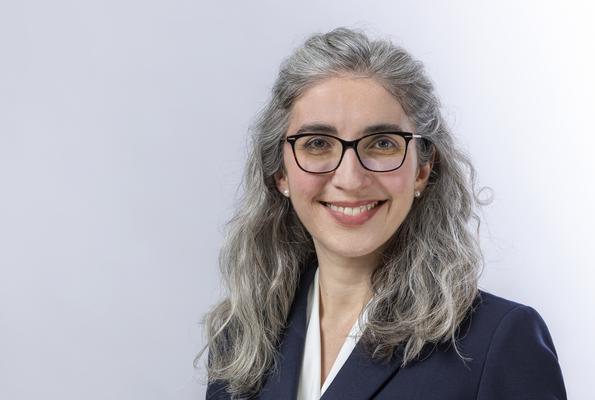
So my name is Karen Rowe. I am a specialist in energy and infrastructure in our legal practice here in London and I help developers and investors build and invest in new energy and energy infrastructure. So things that power the systems that we live in and the infrastructure that carries that power to where we need it to be.
Arun Visweswaran
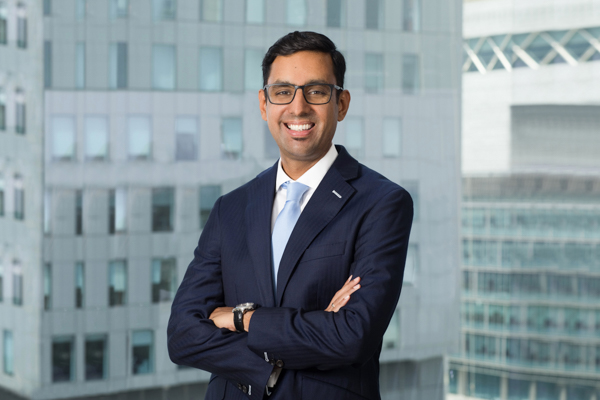
And I do something quite different to what Karen does, which is I am a litigator, but I am also a qualified engineer, which led me naturally to welcome the intersection of technology and law, which then gave rise to quite an interest in data centres, which I know we'll be discussing further on this podcast.
Carly Gulliver
So really it's good because we've got good cop, bad cop on our pod today with transactional and litigator, which I'm sure will make for a really interesting dynamic as we have this conversation. How did you get into this space?
Karen Rowe
I studied biology at university and then after I'd graduated and was working in the environmental consultancy sector, I actually wanted something quite challenging and I very naturally gravitated into law. I studied it in the evenings for a few years before I thought, you know, this is what I want to be. When looking at law, it wasn't any type of law. It was definitely around energy infrastructure. How are we using energy in our businesses, in our lives? What is the infrastructure that helps us use that? And what are the legal structures that support that? That use and that development and that to me is most exciting area I think that we have in society, how we're using energy, how we're future proofing that, but in a very rapidly changing world when we've got these big infrastructure assets that need to operate over long time scales to deliver what is effectively the fundamental asset that we need for our society today, which is energy. It powers everything that we do.
Carly Gulliver
Interesting that you said you've got this scientific biology background. Do you think that helps you in what you do?
Karen Rowe
Yes, absolutely. Because I'm not afraid to talk to engineers and look at spreadsheets and try and convert, you know, the instructions from my clients, many of whom are engineers or work in the assets from a technological aspect. And, you know, they send us spreadsheet and complicated technological questions and say, ‘Can you make this work?’ or ‘where are the risks in that?’ And you have to be able to understand what that is and translate that. So I think having that confidence with engineering and technology, even though that wasn't my area of specialty, but the sort of willingness to jump in and and understand things certainly helps then translating that into legal practice.
Carly Gulliver
Presumably Arun, that's the same to you on your side with your engineering background. Is that right?
Arun Visweswaran
Yes, very much. I think Karen is probably being a bit modest. I'm sure she understands more than she lets own on this podcast. But absolutely. I think it's important to talk the client's language. And if your client is in the business of, for example, building a data centre or investing in one, it helps that you can talk the language they're themselves talking at the same time, bringing the law that comes with it.
Carly Gulliver
Definitely and it's what's going to save us lawyers from being taken over by AI and robots, isn't it? At least it will prolong that hopefully if we can really be strategic and add value in terms of the conversations that we're having beyond just the technical what's on the page and what does the law say. I get that.
So I mean, data centres, as I said, in the whole digital infrastructure piece, it's often making headline news. Investors that I'm speaking to are excited by it because of course we see that as a really in demand growing sector if you like and particularly with the increased use of AI, it's going to be something that becomes more prominent around at the moment seeing less native AI deals, but more interest potentially in digital infrastructure and everything that goes around that. In your space and with your expertise being on data centres and that energy piece, what are you mostly seeing coming across your desk and the conversations that you're having with your clients in this area?
Karen, I'll ask you that one first if that's okay.
Karen Rowe
Absolutely. I mean, all the conversations at the moment are focused on how do we power data centres and everyone's really excited about the opportunities presented by this class. Everyone can recognise how rapidly it's growing. There are so many opportunities and it's multi jurisdictional. It's everywhere. Everyone wants data centres, everyone needs data centres to power the growth in our technological economies and this AI economy that's growing so rapidly. But with that comes a huge power and infrastructure challenge because I think at the moment data centre energy consumption takes about 2% of like global energy demand, which isn't a huge figure when you think of it on that sort of scale, but locally that's quite a different picture. So we anticipate that data centre energy demand is going to double by 2030, which is huge. And in some jurisdictions that is a small proportion, but if you're looking sort of localised around major capital cities, data centres around Amsterdam, London, Frankfurt are already consuming 33 to 40% of the power need in those cities, which is a huge figure. In Dublin, even two years ago, it was 80% and that was just due to the rapid growth and the power demand. So when you've got these sort of huge assets drawing and soaking up power, that comes at the expense of the other infrastructure, residential infrastructure, normal commercial infrastructure that also has to coexist in these cities and that creates real challenges for the system operators who are managing that power and understanding how we're going to successfully deliver against a power challenge of supplying data centres with the energy that they need while also respecting that there is a finite amount of energy in our society and we all need to use it. We need to share it out properly. So how is that going to work and what's it going to look like? And then there are separate, many separate and interesting questions which come off of that. I mean the key one that a lot of people have been talking about in the last year is sort of grid connection. In the UK we've had this huge grid connection reform which has been going on sort of really launched last summer and is still sort of settling where generators were put into a queue to connect to the grids how the people generating power that will go through the transmission system, the entire queue got reorganised to prioritse projects that would be ready to be connected sooner, which has been quite a disruptive exercise for the industry, as you might anticipate. But they're now thinking about doing quite a similar exercise with demand customers. So data centres and and big users of electricity might also go through sort of a Q reform process, which is a huge challenge to investment models, which are looking at how quickly can we get connected, how quickly can we get our power? And it throws up all sorts of new challenges to data centres. Lots of good questions happening at the moment. Well it sounds like
Carly Gulliver
Well it sounds like that must keep you busy, Karen, with the variety of those types of conversations and they're big questions, aren't they?
Karen Rowe
They are. They're not unique to the UK. They are in pretty much every jurisdiction that we're talking about that we work in. So in UK we've been talking about grid reform. In Dublin, because of that 80% power consumption, effectively they haven't been developing any data centre projects. They haven't allowed them to progress because they wouldn't let them connect to the grid. So the answer that was published late last year was the new policy change that projects would have to effectively source their own energy privately and be ready to deliver that to the grid. So you would have to have your own on site generation or battery systems to support the full electricity demand of your data centre. Within six years they have to provide 80% of that from renewable sources and they have to be willing to contribute some of that back into the grid. Suddenly data centres come from being sort of sponges of electricity to new generators of electricity through those connection regimes. And that's Ireland is the leading market in Europe, but we're seeing other jurisdictions follow very closely. So this is sort of a common challenge. And then this varies in the Middle East, you have slightly different challenges, but with governments looking to encourage data centre investment. So they're building out the power infrastructure in areas where they want to support the delivery of the data centre investment so that developers have something that they're ready connect into. But then you look, you know, further east and Southeast Asia where they have quite different energy challenges, they already have different types of infrastructure that need to be developed further. And the challenge there where you have jurisdictions that have energy blackouts or brownouts on a regular basis and already have challenges with intermittent supply is then delivering power to data centres, sort of how do we support the wider infrastructure and on what basis do the data centres get prioritised with with that energy consumption? And how do you solve that challenge of delivering energy and who's going to pay for that?
Carly Gulliver
I mean, it sounds as if it's a very international question and space that we're seeing here with slightly different approaches in different jurisdictions. But Arun, in terms of what you're seeing, and of course you're not based in in the UK, but what are you seeing in your jurisdiction?
Arun Visweswaran
I’m based out of the Dubai office and have been based in the Middle East for a decade now and I confirm what Karen just mentioned about the Middle East. It's a market that is increasingly pivoting to significant data centre investments and I don't just mean one or two of these countries across the board. And there's a lot of government push to do that and it arises from a desire to be self reliant from a sort of data storage, data processing angle. Because a lot of these jurisdictions tend to have what we call data localisation requirements, where particularly the government sector of critical infrastructure providers, they are meant to house the critical data within the jurisdiction. Now what that means practically for people that are consumers of data centres or indeed data centre developers, is that you need to start considering building data centres within these jurisdictions. And I would say that four, five years ago there were a lot of companies thinking about it, whereas the reality now is a lot of them have built it. You have the likes of AWS, Microsoft, SVR, as well as a significant number of regional companies, such as Cazna in UAE, Data World in Saudi and others who are all almost on this massive race to build quite large data centres, both within this region as well as a bit beyond, including Central Asia. So this data sovereignty requirement has almost led to a boom, I would say, of data centres in country, in these regions. And from a pure dispute resolution or litigators perspective, the message that clients who are listening in need to understand is you might not be in the business of data centres, but the chances are you are contracting or using data centres. And you need to carefully review these contracts to make sure your data is secure and you have significant rights in relation to your data. In the instance of business interruption, such as what we're seeing now, data centres make money the longer they stay open 24/7. That's the model. And often these are built into these contracts. What do you do in the event of business interruption? Do you have backups of data that you can get access to? But if the backup of data sits in a data centre outside of the jurisdiction, that customer then needs to take into consideration was that data meant to be stored outside? Are there any data localisation requirements to transfer the data outside, etc? So it calls into question various aspects, not simply what does the contract do with the data centre? Do I have access to data? So I would say that it proves two things. One, the data centres are indeed critical infrastructure in the modern era, not just in the Middle East, anywhere and therefore, as a consumer, you're almost certainly linked one way or the other to these data centres. Corporates or clients who use them, you need to carefully pour over the contracts, make sure you have some rights in relation to data, particularly in the instance of business interruption. Lastly I would just note that business interruption, I gave you one example which is current, but it can happen in a most health manner, which is what we call cyberess or cyber hacks. And that is the other aspect which most data centres have to ward off almost every single day. I think every data asset has to ward off thousands of potential attacks that happen every month. But there's the unfortunate risk that one of them succeeds, which again leads to business interruption and more importantly, loss or a theft of your precious data, which, as someone said, is the new oil after all. So you need to be thinking about all this as consumers. It's not just data centre developers who need to be worried about all this. You as consumers or contracting parties with data centres need to be equally aware of your rights and make sure you're well prepared in the event of some sort of business interruption.
Carly Gulliver
That’sreally interesting. So clearly it sounds from a contracting perspective, there's a real need to check out the terms of contract and make sure that you are protected and understand what's in that contract. How standard are these contracts, Arun? Is there much room to negotiate on these?
Arun Visweswaran
Very good point. I think the short answer is no. But it really depends on the leverage. If you have a multi million dollar contract with a data centre provider, chances are you will be able to negotiate something bespoke. And that often might be the case, particularly for large banks who use data centres or large corporates. But if you're an SME or if you are a smaller entity, the chances are you might not have that leverage to negotiate these contracts. And a simple example is force majeure. Everyone just assumes force majeure is something baked in law. The answer is it often isn't and it's often a creature of contract. So you need to be wary of what force majeure is actually defined as in your contract to even realise if a particular event is a force majeure event or not. And we're increasingly seeing that in the current situation where clients assume everything is a force majeure, but actually it really very much depends on what's written in your contract. So I think unfortunately it comes down to what's in these contracts? And the short answer is some parties will be able to negotiate, but not all.
Carly Gulliver
So is it also a case then of understanding what the contract is, but once it's in place, how you live the contract in terms of it may be that you need as a business to put other systems in place. So things that you mentioned there around, you know, business continuity, disaster recovery and steps like that in order to ensure that in challenging situation that you understand what's in place, but you also understand what the operational steps are that you need to take in order to put things right or at least have mitigants.
Arun Visweswaran
Absolutely. And that's spot on because I think most corporations these days do have some sort of core response team or they should be having that because that is imperative when your business is hit with a crisis. And that can happen. That did happen in one of my matters where we had a very large supermarket chain in the Middle East whose data was stored in a data centre and that data was allegedly stolen and there was someone wanting a ransom in order to return that data. And that poses a whole host of questions, both regulatory, legal, but also commercial and reputational. And if you do not have a corresponse team as a corporation and you're starting to put one together the first time you hear of a crisis, unfortunately you're just too late and you've given the other side the upper hand. And so often while I do get involved in the disputes stage of matters, a second part of what I often advise in my practice is to advise clients about the risks and make sure they're mitigating the risk well before the risk has actually come to realisation. And so I think it's an absolutely valid point, Carly, which is corporations need to be constantly, not just putting these teams in place, but keeping them up to date, doing some demo sessions or or what we call crisis simulations. So it's something that the team internally and in-house are constantly kept on their toes as to this because you never know when a crisis will happen.
Carly Gulliver
Yeah, and I think we've really seen that tested, haven't we? More so than ever in these current uncertain times that we're living in and with some of these macro events that we're seeing. Karen, are your clients talking to you about this type of business resilience on your side of things?
Karen Rowe
I mean, from a power perspective, the resilience question is providing base-load continuous power consumption. So you can't have intermittency. Data centres need continuous energy 24/7 to run efficiently, to be available for their clients and customers. That's the business model is to have facilities that operate 24/7 and to deliver that, you need your electricity to be constant, stable, predictable. So crisis planning and continuity planning in the energy sphere is very much focused on how do you make sure there are backup suppliers and backups on your backups. And traditionally the model for data centre power delivery was connect to the national grid, whatever that looks like in a relevant jurisdiction, but connect to that high level constant source of power that's provided nationally and have some on-site backups through diesel generation, something like that. That's not going to be the model of the future and we're already seeing a lot of innovation in power delivery to data centre developers is they're both sort of managing for future grid intermittency risks, managing for the risk of not getting connections to those grids brought forward in the way that in the time scales that they would like to, and also to meet energy transition challenges and that challenge of low carbon supply and ensuring that their energy on site is green, because that's also a big factor for a lot of the data centre developers that we look at. They want that green sourcing to be available to them. So I think the future model is more of a microgrid mixed use system where you have locally generated on-site supply, whether that's high efficiency gas turbines, combined cooling, heating, power, hydrogen-powered systems, coupled with renewable energy systems, solar, wind, with storage, so battery systems as well, all connected as a sort of microgrid that then powers the data centre and gives it that continuous source of energy and that's quite a lot of work. That's quite a different business to develop than just developing a data centre, which is, yes, sort of I mean, without meaning to denigrate and hopefully no one takes offence at this, about to be a data centre being a very large box filled with a lot of high tech equipment, locally sourced on site renewables, things that spin and have turbines in them and that can go wrong in lots of different ways. That's a very different development challenge and not something that data centre developers traditionally would do themselves. So they need to find partners who were experienced in developing these sort of energy assets and in designing these grid systems with that electrical engineering support to figure out how best to meet the demands of the data centre. And that's quite a different project to develop than just a traditional data centre development model. So we have seen examples of this. I think saw the first sort of news article describing a microgrid project that had been fully commissioned in Ireland, and that was Pure Data Centres, microgrid facility, and they were supported by AVK on delivering that and we know that that's just one of many projects that are in development that people are looking at as sort of alternative solutions to securing power supply that is resilient, local, goalable, and dedicated to those data centres so that they have that security to develop and support their business models.
Carly Gulliver
Arun, one thing you mentioned earlier was just around the cybersecurity and some of the business resilience side of things. I mean, that kind of links to a lot of conversations I'm hearing at the moment in the news and and more generally around data sovereignty. What sort of conversations are you having with your clients on that area at the moment?
Arun Visweswaran
Very good question, Carly. Look, I think I might almost split the world into two in some ways, which is those countries that allow free flow of data, those countries that tend to want to keep some data in country. And there are increasing number of jurisdictions in the latter bucket and there are some of them in the region here. And it's not that they don't intend to allow free flow of data, but certain types of data are meant to be stored in country, but allowed to transfer with requisite approvals from be it an authority or requisite safeguards in place. And as I mentioned earlier in our conversation, what a lot of the large data centre players realised quite early on is this is coming in the Middle East and therefore I need to start building data centres in the Middle East because otherwise I'm not going to get these large contracts that makes this business profitable. And we've seen that happen over the last, I would say, six to seven years, where alongside new data protection laws in these jurisdictions, some of which localise data a bit more than others, you've had these large data centre operators come into the region, build these large data centres, which has, I believe, proved to be increasingly profitable for them. So it is something that clients are very wary about because particularly where I deal with a lot of government and sovereign entities in the region, they typically tend to have these requirements imposed upon them, be it through the data protection law or internal policies. But they also tend to be the largest business in the region because they tend to own and operate most of the businesses, most of the large businesses in the region. And it's a common tussle they have because on the one hand, they want to do deals, they want to do contracts with these large global providers who have footprints globally and they want to be a global player. But at the same time they have to make sure that the information is stored locally. So it's a constant tussle for most legal teams on the ground where they have to make sure that the data that does get transferred, say during an M&A deal, is actually not all the data is being sent outside without the requisite permission. If there is no permission, maybe you have to do your due diligence in country. So these are some of the practical challenges. From a pure data centre perspective, I think what the data sovereignty has created is an increasing localised investment in data centres across the region.
Carly Gulliver
I think that was quite a neat answer actually to what is a really complicated question, clearly. What's exciting you most in this space as an advisor?
Arun Visweswaran
I think what I would say is if I were just to say focus on those who build data centres, as a litigator who has passion and technology and some experience of it, I think it's the different types of disputes that arise in the data centre ecosystem which really companies should be thinking about and protecting themselves against. Because often they don't realise that there can be different strands and completely different angles where you might face a dispute. So to give you some examples, I did one dispute where, as Karen very rightly mentioned, a data centre is a large building, but without the technology, it's not a data centre. And that technology, much like AI that you mentioned, is evolving at such a rapid pace that it's quite difficult often even for data centre operators to keep in touch with it. And so what happens is if that technology has to get impacted in any way, that can critically impair your operation. So I had a case where the data centre, given it's the Middle East cooling systems are extremely critical given the temperature, and they faced an allegation from an unknown third party that the cooling system was infringing their intellectual property rights and that therefore they should cease and desist from using the cooling system. Now, this is a cooling system that's been installed and operational for over a year and a half. So it's not something that you can just, you know, remove from the grid and just throw out. So it raised all sorts of issues and the first thing you do there is you start to see down the supply chain who actually could cure this tech? Because as the owner or developer, you're not the one doing all this. You contracted it out. So you need to see where the risk really lies and raise requisite claims and notices with those parties. So that's one example of technology itself being the core of a dispute. But then you could have a dispute in, for example, the real estate space. Again, as Karen mentioned, if you're looking at countries like the UK or Ireland or Europe, space is a precious commodity, maybe a bit less of a precious commodity at the moment in the Middle East, but in the rest of the world it is. And therefore but these data centres need space. Right now I think they're moving vertically, but if they're horizontal, they need a lot of land and that land needs to be energised, which people like Karen help enable. But that land itself can throw all sorts of real estate disputes. So I did one where the landowner had leased a long term lease to, funnily enough, a crypto mining company who are going to use the data centre that was situated on or being built on that land and a significant part of the dispute was that the crypto company alleged that that this landowner had put in the contract that they would ensure this data centre was energized by X State, which didn't happen. Obviously the landowner doesn't control the energy, it's from the regulator. But that led to a whole long dispute and ultimately they ended up having to terminate the lease and sue for damages, etc. So you can have a technology dispute on the one hand, but you could have something as simple as a lease or land dispute on the other hand. Then there's all the other types of disputes in between, such as construction disputes, which have existed for a while, and also increasingly energy disputes, because these contracts are long term. They're meant to operate for twenty five years or longer, and you could have energy disputes play out in the data centre space.
Carly Gulliver
So there's plenty to get your teeth into by the sounds of things. What I'm hearing from both of you, data centres is a very interesting topic, not just because it's, you know, in the news, in the media and making the headlines, but it really draws upon some of the things that we're seeing around we have huge infrastructure challenges, impacts, questions around cybersecurity, business resilience, the consumers of power and also people that enter into data contracts in terms of what the contracts need to look like and some of the important areas in those. There's definitely some really interesting areas around data operator risks too, to get into. I can see how with both of you working together, I think our clients are really well covered, both from an international perspective, what it needs to look like in the run up to entering into the contract, but then managing the contract and then hopefully not, but the potential fallouts of those contracts. Arun with your crystal ball, what would you tell the C- suite leaders and boards and businesses that they need to be thinking about in terms of the future landscape of data centres?
Arun Visweswaran
I wish I had a very good crystal ball to start with, but let's assume I did. What I would say is three points for the C-suite and for business owners. That data centres will be the norm, have been the norm, and continue to be the norm for storing data for the years to come. But they're also increasingly going to be incorporating other more advanced technology, including AI itself. So you may very often going forward have a one-stop shop where your AI provider is also your data centre provider. And so you're gonna have this increasing tension between on the one hand, you want your data safe, you want your data secure. On the other hand, what sort of things is this AI going to be doing with your data? How much control do you have over it? And how much does it actually benefit your business? Or is it more just a fad? You need to be thinking carefully about all these add-on services that are going to come your way with data centres.
The second point is if you're in the business of data centres or you're planning to get into the business of data centres, I think this is an absolutely fantastic time as far as the technological evolution cycle goes, because this is the time to get into that space. With the increasing necessity for data centres, with the increasing use of AI, it just is imperative that we need more data centres. We just don't have enough. And as Karen said, we don't have enough energy either to power all those data centres. So it is a time of a bit of a boom in the sector and it is the time to be getting into it.
And lastly, with my litigator hat on, the point I would stress is you should always make sure you have a co-response team in this digital age that we live in, be it with C-suite members, members of your CISO, Head of IT, legal representative and others. Because often you never can predict when a crisis will hit, but it's always better to be prepared if it does. Those are my three points, Carly.
Carly Gulliver
Thanks so much for joining us there. You've certainly given me a few things to think about and interesting things to talk about with my clients in the data centre area.
Arun Visweswaran
Thank you for having me, Carly. I think I've learnt a few things along the way as well and hopefully we'll be as a team able to advise our clients in this very interesting sector going forward.
Carly Gulliver
Thanks joining us on today's episode of Inside Tech Minds. If you enjoyed the conversation, don't forget to follow and subscribe on Apple or Spotify or even leave us a review. Thanks for listening and we'll see you next time.