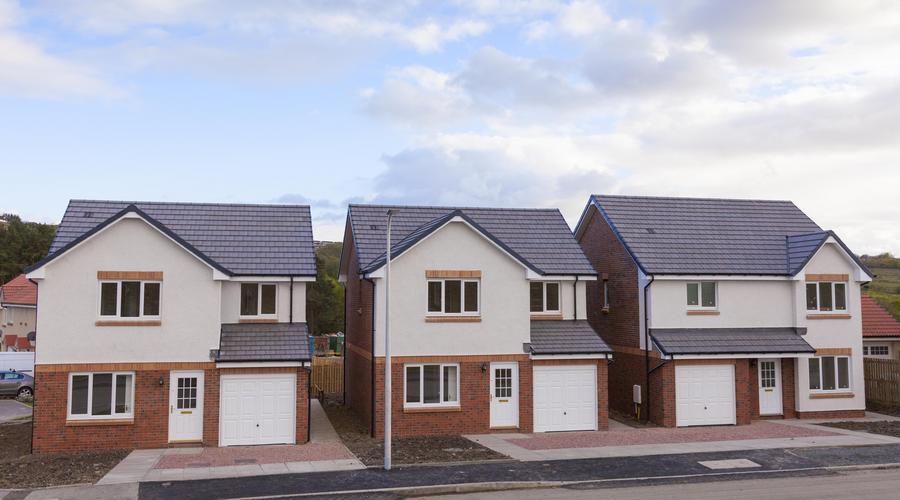
Into Nominee One Ltd v Study Group UK Ltd [2026] EWHC 1201 (TCC); [2026] EGCS 87 concerned an education facility comprising two blocks – one academic, one accommodation for students. Neither block was a higher-risk building under the 2022 Act. The tenant, Study Group UK (SGUK), argued that serious fire safety defects rendered the facility unsafe and unoccupiable. The required remediation meant that the facility would likely remain unoccupiable until the end of the term. SGUK argued the premises were unfit for their intended use and the lease was frustrated. SGUK characterised this as the first time the court had considered the interplay between lease obligations and life critical defects identified post-Grenfell.
Frustration occurs where, without fault of either party, further performance would be “radically different” from that contemplated by the contract. For leases, the bar is higher since the contract is a demise of an interest in land for a term and the courts are very reluctant to terminate that estate on frustration grounds.
Here, the court examined both the agreement for lease and the lease and concluded that the parties had actively allocated the risk of inherent defects between those two instruments. There was no common expectation that the premises would be free from defects. On those facts, the risk that life critical defects could emerge during the term had not made performance “radically different” from that contemplated by the parties at the commencement of the lease. SGUK was held to the lease.
In contrast, in Essendi UK Hotels 2 Ltd v London Property Company Ltd [2026] EWHC 1354; [2026] EGCS 93, the circumstances at the commencement of the lease, including a post-Grenfell awareness of fire safety issues, were sufficient to displace a presumption typically applied when interpreting a covenant to keep a premises in good condition. It has been established in previous cases that such a covenant does not, without more, include a duty to put premises into a safe condition where that lack of safety results from an inherent defect which has not led to any actual damage or disrepair to the premises.
Here, the subject property was a 16-storey tower housing the Ibis London Wembley Hotel, which was clad in category 3 ACM combustible panels. The tenant, Essendi UK Hotels 2 Ltd, closed the hotel due to the fire risk to guests, staff and visitors of the hotel. The court described the case as novel because the tenant sought to use standard landlord covenants to obtain what is, in substance, a building safety remediation order against the landlord in circumstances where the enforcement regime under the 2022 Act does not apply to hotels.
The judge accepted that presumptions applied when interpreting leases are not absolute and can be displaced by context. Here, the court took account of the age, character and locality of the building, being a high-rise tower exceeding 18m, used as a hotel. The court considered the post-Grenfell understanding of fire risk in tall, multi-occupancy buildings. At the commencement of the lease, the landlord had reported that the cladding was solid aluminium, which did not represent an intolerable fire risk. Had the true position been known, both parties would have appreciated that it was inconceivable that the tenant would have renewed its lease without a commitment from the landlord to replace the cladding.
On that basis, the court construed the landlord’s obligation to keep the premises in good condition as including an obligation to put and keep the building in a condition which, given its age, character, height, use and location, would make it reasonably fit for use as a hotel so far as fire-safety risks are concerned.
The judge indicated that – at least for post-Grenfell covenants – a “good condition” obligation in this context ought generally to bear that meaning.
The court considered whether the decision to close the hotel was a reasonable response to the landlord’s breach of covenant. It took account of the expert advice the tenant had received on the seriousness of the fire risk, the risk of criminal prosecution and reputational risk. The tenant had not simply accepted the closure decision, but rather had challenged the advice. The landlord had been unwilling to admit the cladding was combustible and refused to accept that it was responsible for replacement even when combustibility was established. On those facts, closure was held to be a reasonable response, and the tenant was entitled to damages for its resulting losses.
A covenant to keep in good repair and condition is very typical and one can well imagine how parties to leases, beyond a residential setting, might seek to rely on this decision to force a party to remediate or seek to recover losses arising from a failure to do so.
Those outside the living sector should also be aware that the 2022 Act enforcement regime can be imposed on corporate parties by association. Remediation contribution orders can be made against developers and/or landlords of “relevant buildings” (over 11m or five storeys, with at least two dwellings) or those associated with them – even after assets or corporate entities are transferred. This means, on a share acquisition, buyers need to consider the RCO liability of the target but also the companies associated with it, whether the problematic company or asset is part of the transaction or not.
The risk of building liability orders is arguably greater since they can be made in respect of any building of any height, so not just residential. The test for association with a culpable party is assessed over a much lengthier period too, potentially encompassing a buyer’s corporate group.
Similarly, there remains recourse to sellers for building safety defects following the sale of a company or asset. Specific due diligence and warranties have been developed to cater for these risks and should become more widely adopted as awareness of the risk by association improves.
Investors in other asset classes such as retail or office space can also find themselves caught by the 2022 Act enforcement regime. The application of the Act to superior landlords means that an owner could be caught even where the residential parts are let out on a long lease to an unrelated third party. The value may be in the commercial real estate, but owners should carry out a “health check” on the remote interest they hold in residential parts. The risk exists whether it is an existing asset or a new acquisition.
Where the different use classes cannot be treated as “independent sections” under the legislation, owners should consider whether enhanced health and safety duties for higher-risk buildings apply and whether works to commercial premises such as tenant fit-outs will trigger enhanced building control approval requirements. If so, protections will need to be included in agreements for lease and licences for works to ensure the regulatory risk and threat to timescales is allocated between the parties.
The service charge protections for leaseholders of residential properties has been well publicised. However, there is one, often forgotten, service charge protection that applies to all tenants, including commercial tenants. This protection may apply in a typical scenario where commercial units form the ground floor of a residential tower block, which is subject to a remediation scheme to tackle fire safety defects.
Even where the lease terms are favourable to the landlord, in terms of recovering a proportion of the remediation cost from the commercial tenant, a landlord will be prevented from doing so where the landlord or any superior landlord (at 14 February 2022) is deemed responsible for the defect in question. Broadly, this will be the case where the relevant landlord carried out or commissioned works that caused the defect or were associated with the entity that did.
The headline is that liability for building safety defects is a pervasive risk – not limited to the “living” sector. Landlord and tenant concepts may be interpreted with building safety in mind across asset classes. RCOs and BLOs should be considered a corporate risk, rather than property specific risk, with liabilities that can arise after a deal has completed and beyond the residential or construction part of a group structure. Where landlords own a remote interest in residential parts of a mixed-use development, they should consider the risk of being required to contribute to remediation costs and the impact those residential parts might have on the asset management of the commercial parts.