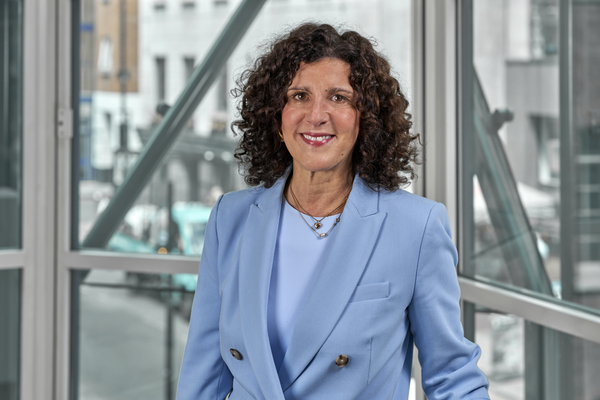
Alumni Legacy Stories
These candid Q&As feature reflections from three accomplished alumni: Nicky Morgan, The Rt Hon the Baroness Morgan of Cotes, who trained and worked at Theodore Goddard in the late 1990s, Malcolm McPherson, AG Consultant and former Senior Partner of HBJ Gateley, and Anthony E. Collins, whose grandfather founded the Dublin-based law firm Eugene F Collins in 1893. Each of these stories is rooted in a legacy firm that forms part of our 250-year history. Theodore Goddard became Addleshaw Goddard in 2003. HBJ Gateley merged with Addleshaw Goddard in 2017. And, in 2022, we merged with Eugene F Collins to open our doors in Ireland. These legacies, and the people behind them, have helped to shape our uniquely AG culture and given us a solid platform from which to grow and evolve.
Nicky Morgan, the Rt Hon the Baroness Morgan of Cotes, UK House of Lords
Nicky Morgan’s career spans corporate law, Cabinet government and boardroom leadership. In this alumni Q&A, she reflects on the habits she carried from Theodore Goddard into public office, the leadership belief she has most changed her mind about and why saying “I don’t know” is a mark of strength, not weakness.
1. Which habits from your years in corporate law most shaped how you made decisions in government?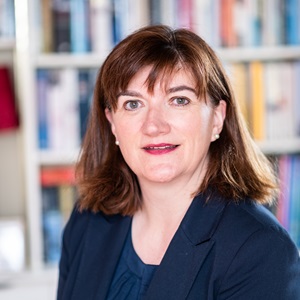
The biggest was learning how to process large amounts of information and identify what really matters. As a trainee and junior lawyer, due diligence required you to find the key detail buried in complex material. That same skill proved invaluable in government when reviewing ministerial submissions. Whether in corporate law or public office, decision-making often comes down to distilling complexity into clarity.
2. When you think back to your time at Theodore Goddard, what was most formative about that environment?
Early in my training contract, I sent the wrong version of a contract to a client. I felt awful, but the response from my training partner taught me an important lesson: own your mistakes and deal with them directly. I also learned a huge amount simply by being in the room with experienced professionals, observing how they worked, communicated and made decisions. Those experiences were invaluable.
3. What belief about leadership have you most changed your mind on over the course of your career?
Earlier in my career, I assumed senior leaders had all the answers. Over time, I’ve learned that strong leaders stay curious and are honest about what they don’t know. The ability to say, “I don’t know, but I’ll find out,” builds trust. Leadership is about surrounding yourself with talented people and continuing to learn from them.
4. If today’s lawyers could borrow one thing from the era you trained in, what should it be?
Being physically present and learning by observation. Hybrid working has clear benefits, but particularly early in your career, there is enormous value in sitting in meetings, listening and picking up signals that are difficult to capture remotely. I also think there is something to be said for developing strong research skills and understanding information deeply, rather than relying purely on quick digital searches.
5. What do you protect most fiercely in your life today?
I prioritise wellbeing and mental health. Exercise, particularly running and yoga, gives me the space to think and reset. After many years in high-pressure roles, I’ve learned how important it is to protect that time. Completing the London Marathon was a personal milestone, although I was quickly reminded to stay grounded when my son told me I’d been beaten by someone running dressed as a beer bottle!
Malcolm McPherson, AG Consultant
In this special alumni interview, Malcolm McPherson reflects on four decades of leadership at HBJ Gateley, the lessons learned from growth and missteps and why entrepreneurial spirit was non-negotiable in the 2017 merger with Addleshaw Goddard.
1. Across more than four decades at HBJ Gateley, what proved most formative in shaping your approach to leadership and responsibility?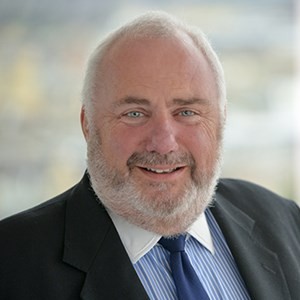
As a result of a rather strange set of circumstances, I ended up taking the lead in my firm, Henderson and Jackson, at the age of 28, having served as a partner for just over two years. With little experience and no training in leadership, what followed was influenced by learning from my mistakes and listening to friends in business and experienced clients. Many people helped me to understand that information on financial matters was key to be able to make plans for the future.
Obviously over time you can adopt a style that suits your personality and build a team that share your approach. At HBJ we urged everyone to put the firm first on the basis that if you looked after the firm, the firm would look after you. In time, we built a team who adopted that mantra and by consistently proving that the leadership believed in the business and was determined to give opportunity to those working with us to progress, a spirit was created that bound us together.
Sharing the vision, setting goals and showing ambition led to people pushing to join us and we were able to retain our best people who were trusted, given responsibility and ownership. Continuity within the team was essential to create a culture that was embedded in the firm. We focused on trainee recruitment and successfully encouraged the best to stay with us long term. I believed that our leadership created a firm that was fun to work in, responsive to criticism and quick to recognise talent. In summation, my view of leadership was to try as best I could to first find then inspire good people and then allow them to drive the firm forward.
2. You led HBJ Gateley through several mergers over the years. What distinguished decisions that strengthened the firm from those that simply created scale?
Our first merger was taking over a sole practitioner, and the success of that deal encouraged us into numerous mergers over the years. That merger gave us a litigation practice, the next a shipping practice and so it went on, bringing good people in and enabling the firm to grow infinitely faster than it could organically. The firm created a bit of a stir in the Scottish market, and I think I started to believe that we had a magic formula.
We soon realised that any future merger would have to bring us strength and quality and not just increase numbers. We created considerable interest when we connected to Gateley Waring of Birmingham as at the time there were very few cross-border firms. The strength and opportunity that flowed from the cross-border firm did persuade us that it would be an essential factor in planning our future. We were receptive when suitors came calling and there were numerous early-stage conversations, but from the very first chat with John Joyce, the possibility of merger with AG felt very attractive. We shared a vision and it felt as though our cultures were aligned, despite the difference in scale between the two firms.
3. When you look back at HBJ Gateley as an Addleshaw Goddard legacy firm, what do you think was most important to preserve through the 2017 merger?
The merger with Addleshaw Goddard has been an extraordinary success, a brilliant move for everyone. When discussions were ongoing, I emphasised that for us to grow and improve with the strength of the AG brand, it was important that the entrepreneurial drive of HBJ was not lost, nor should we lose the enjoyment of life in the firm. None of that could be guaranteed but, in conversations with the AG management team, we formed the view that these issues were as important to them as they were to us. The fact that Scotland has now three times the turnover it had in 2017 and the partnership in Scotland is still intact suggests we got that right.
4. Your career has spanned law, governance and sport. What have those different environments taught you about leadership that legal practice alone might not?
I was fortunate that the partners in HBJ gave me the freedom to focus on seeking opportunities for the firm and I spent a lot of time speaking to potential merger partners and of course potential clients. My network was ever expanded by utilising the various appointments I was allowed to take on. I had numerous non-executive directorships where I was able to learn from some very able businesspeople and also to develop business contacts. With that speciality and the foresight of the partners, the firm grew in size and profitability. In an effort to give something back to a profession that has been good for me, I had a lengthy term chairing Law Society discipline tribunals and, with my interest in sport, was an original member of the judicial panel of the Scottish Football Association. Working closely with all these different bodies and in such different environments gave me a breadth of experience that simply being involved in a legal practice could not.
5. What do you value most in your professional life today?
My professional life today is focused on keeping in touch with clients and continuing to look for opportunities to develop the AG business. After 51 years of continuously trying to find new work, it’s in my soul and I can’t stop. I enjoy business and would seriously regret not having the opportunity to engage with those that run companies and offer, when asked, opinions based on a lifetime of experience in all sorts of areas. I work with a small spin-out from HBJ which is much closer to where it all began and thoroughly enjoy that. The Hibernian Football Club is my labour of love and chairing that business was an honour and really exciting. It’s not like other companies - the highs and lows can come only days apart. I am lucky to have my ongoing connection with AG and the amazing team there and to see close up the phenomenal success of our moving HBJ into AG.
Anthony E Collins, Consultant and Independent Director
Anthony E Collins qualified as a solicitor in 1964 and joined Eugene F Collins, the legacy firm founded by his grandfather, in 1893. At the time, the firm comprised just seven people including his father. By the time Anthony retired in 2015, it had grown to 130. Alongside his role in practice, he served as President of the Law Society of Ireland and as a director of several quoted companies
1. Looking back over your years at Eugene F Collins, what proved most formative in shaping how you approach professional judgement and responsibility?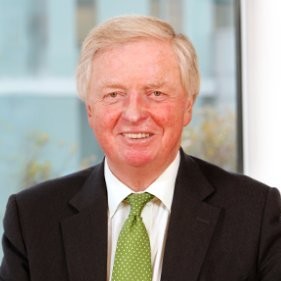
My father, with his integrity and common sense, was a huge influence on my approach to being a solicitor and I realised early on that judgement and direction were linked. Although the legacy firm was small, we had, as clients, some major companies and we decided to place more emphasis on the corporate side. To do this we needed to grow and did so steadily over the years recruiting solicitors and merging with some smaller firms.
2. As President of the Law Society of Ireland what did you come to understand about leadership within a profession that you hadn’t fully appreciated before?
I came to appreciate that leadership in the profession should mean working with people and bringing them with you. The importance of listening was vital.
3. If today’s lawyers could borrow one thing from the year in which you trained, what do you think would still serve them well?
Positive teamwork. Discussing a problem with a colleague rather than texting or emailing somebody 20 yards away. Effective communication with colleagues and clients is essential.
4. What distinguishes the most effective independent directors you’ve worked with from those who are merely experienced?
The difference between an effective independent and a merely experienced one is enormous. An effective independent director will be fully conversant with all the Board papers and will show independence of mind and will not hesitate to challenge other views. He or she will always act with the good of the company in mind.
5. What do you protect most fiercely in your life?
Integrity. When talking to newly qualified solicitors I always emphasised “you have one life and one reputation”.