Christina Proffitt
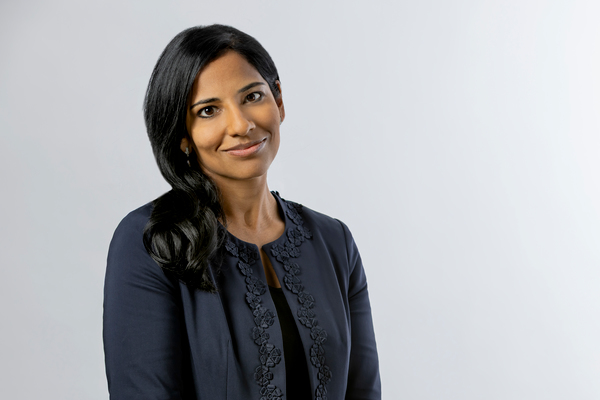
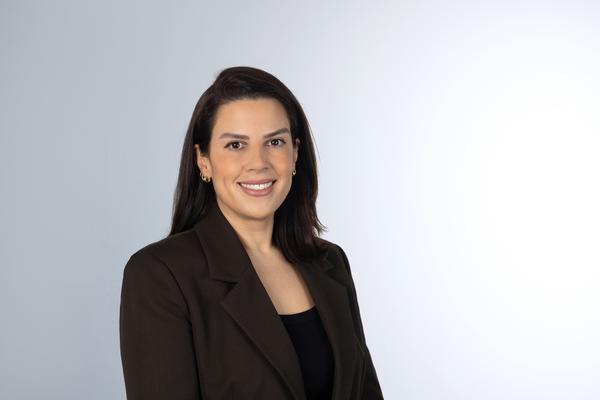
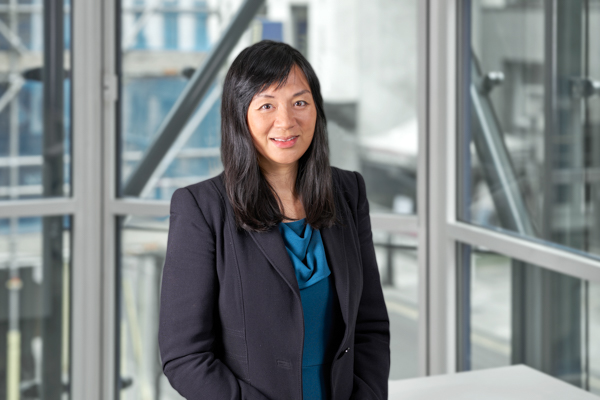
Welcome to Everything Financial Services from Addleshaw Goddard, the international full-service law firm. This podcast delivers timely insights into the financial services sector from legal and industry specialists. I'm Christina Profitt, Knowledge Counsel in the Financial Services team at AG. On the show with me today is Lisa Lee Lewis, a partner in Addleshaw Goddard's financial services team based in London. Lisa specialises in financial regulation and financial crime risk management. I'm also joined by Anna Zeitlin, a financial services partner based in AG's Dubai office. Anna specialises in FinTech. Lisa, Anna, lovely to have you on. Thanks so much for joining me on the podcast today. Let's dive in. Lisa, you and I first met about 12 years ago when we were working together and then we reconnected properly about two years ago at a mutual friends dinner, which actually led to us working together again. So what really convinced me to join the firm was how you described your role at that dinner and what type of work you did. So I wonder if you might share what you said to me with others on this podcast.
Lisa Lee Lewis
Absolutely, Christina. Thank you for inviting me to this podcast. So in short, I help financial institutions and fintechs navigate complex regulation. We turn legal challenges into commercial opportunities. We advise financial institutions across the breadth from banks, asset managers, investment firms, wealth managers, platforms, retails, issuers, lenders, and digital asset entities. We advise across the board. This means that we provide technical and rigorous advice that is really strengthened by our risk management and compliance backgrounds. So the combination ensures that my guidance is not only legally sound, but operationally workable and aligned to evolving regulatory expectations.
Christina Proffitt
Thanks, Lisa. That's really helpful. Anna, I wonder if you might tell us a little bit about what you do and why your role is so important to the economy.
Anna Zeitlin
Sure, so really nice to be on the podcast. Thanks for having me. My role is similar in some respects to Lisa's, but a little different also. So in terms of what my day to day looks like, I would say we spend about forty percent of our time advising government entities in the region on developing their regulatory regimes. So this could be anything from setting up the crypto regulator in Dubai, to designing an open finance, open banking framework in Saudi Arabia, to most recently designing a tokenisation regime for Qatar and in particular real estate tokenisation. And then I would say about 60% of our practice is dedicated towards helping existing players in the market expand their financial footprint and sometimes even working with players who have never been in the Middle East before, enter the market, set up shop here and ensure regulatory compliance. Why are we as lawyers so important to the economy? I sometimes wonder whether lawyers think that they are a little bit too important altogether. But I have to say we are quite a crucial interface in terms of developing the fintech economy in the Middle East because many clients come to us with an eagerness or willingness to help grow the economy here, but want to do so in a compliant manner and it is our job to act as the conduit for that. So definite parallels to what Lisa was referring to earlier.
Christina Proffitt
So you're not just partaking in the conversation. It sounds like you guys are part of leading the conversation. That's pretty role changing for the economy.
Anna Zeitlin
Yeah. Yeah, very true actually.
Christina Proffitt
Let's go with an icebreaker question. What is the one thing you think has been revolutionary in financial services?
Lisa Lee Lewis
Well, at the moment, digital assets in the UK and globally in the Middle East, in the US, Asia, we're seeing quite a seismic shift. That has been happening over some time. And in the UK, for example, we will see regulatory instruments bringing crypto asset activity squarely within the financial services regime, which gives UK regulators sharper teeth to oversee the sector. There's different movements across the world, some more advanced than others. But what we are seeing is that the UK, the Middle East, other leading economies are doubling down on their multi-money strategy, they’re fast tracking work on stable coins, tokenised deposits, tokenised real world assets, central bank digital currencies work. We're seeing a multi-money strategy move forward in real time. In addition, and alongside this strategy, we're seeing from a UK perspective a payments forward plan which is really raising the bar for retail payments. It lays the roadmap for open banking and weaving in new forms of digital money, whilst also upgrading settlement systems, which is really important if we're thinking about interoperability. And globally, the race to update, embed, legislate for this area continues for digital assets, stablecoins to really support very much innovative use cases across the industry.
Christina Proffitt
Thanks, Lisa. Now, Anna, with what you've said about being part of leading the conversation in innovation, I'm gonna ask you a tricky one. If you could create a financial product that doesn't exist yet, what would it solve?
Anna Zeitlin
My gosh, Christina, that is a tricky one. So I think I wouldn't create a financial product per se, because I think there are lots of good ideas and lots of good creations already. What I would like is some sort of magic wand that can help implement and implement relatively quickly. So I think that there are a couple of barriers to entry here, and I heard a really interesting talk from the now General Counsel of the Virtual Asset Regulatory Authority in Dubai and he said that our job really is to implement principle-based regulation that allows technology to adapt and be implemented without always having to run along behind and update and amend regulation, which ultimately can lead to delays in tech adoption. I also really want to see a world where traditional finance players such as the banks feel more confident, willing, and able to take up these new technologies and really run with them. And I think that that is really where this industry is struggling a bit at the moment. There are lots of brilliant initiatives, lots of brilliant products, even, but it's really all about implementing, implementing quickly with the security of not being hounded by the regulators as they are implemented.
Christina Proffitt
Thank you. I think you're right. Principle based regulation is a really effective way for regulators, as we've seen in the UK, get under the skin of what firms are actually doing rather than checking that they're just ticking the right boxes. So going back to a little bit more about both of you, maybe starting with Lisa. So looking back at your career, please tell us an interesting anecdote or story that influenced who you are today.
Lisa Lee Lewis
Absolutely. So looking back on my career, my journey into law has come across many obstacles. And there are many stories that I could tell that very much entries into firstly the industry and secondly wanting to gain experience in the areas that I wanted to gain experience in. I think that that I had faced many obstacles and each obstacle demanded extra perseverance and hard work. But with support from colleagues, friends, family, I faced these challenges head on. And what I would say is that it's really shaped who I am today. It's taught me the value of resilience, perseverance. Early on through my career, I learned about understanding businesses, understanding people, helping clients find workable solutions to very complex technical and operational issues. I learned that it was okay not to solve for every problem, but focus on delivering against the objectives that matter the most. And even when things don't go perfectly, I did treat each challenge as an opportunity to learn and improve. So by keeping my eye, your eye on the bigger picture and not letting minor setbacks distract us, I was able to grow, persevere, look forward in in terms of my career, help others through sheer resilience.
Christina Proffitt
Thank you. I definitely think what you've said about the people side matters. We probably wouldn't even be on this podcast together if you hadn't convinced me to join the firm when we reconnected as friends a few years ago. Anna, can I ask the same question to you? Looking back at your career, can you tell us an interesting anecdote or story that's influenced who you are today?
Anna Zeitlin
I mean, there are lots, but I can pick at one which has stuck with me and it's such a simple principle that it taught me. I was a trainee and I had been part of a huge ship finance transaction. I started out actually doing ship finance work rather than financial services regulatory work. During the course of this transaction, a partner at my firm had written something in an email to a partner at another firm and they had started a rather aggressive exchange of emails. Later that evening we were on an all parties call and during that time somebody at my old firm had said something rather rude about the partner at the other firm and hadn't put himself on mute and he was then called out in front of everybody on an all parties call for his poor language directed at another partner. And I got off that call and remembered or sort of made a mental note to remember throughout my career that how you treat people and your reputation really is everything. And I think that that is particularly true for women, actually. I do feel like men probably can get away with a little bit more than we can, even in 2026. But actually, when it comes down to it, you have a duty in the workplace to double check everything that you write, make sure that not only are there no mistakes, but also you are being polite and presentable. And what I will say is that people that I met when I was a trainee have since come back around into my life as a partner. And having that reputation for being a pleasant person to work with, as well as a good lawyer, is really really important. And this is something I certainly try to teach all the juniors in my team as well.
Christina Proffitt
Couldn’t agree more. This is spot on about our relationships with others professionally. I'm always struck by the smallness of our world and how people who were once difficult colleagues might become clients and vice versa. So really good point to remember. Now, moving on to the here and now, what's the hottest topic or trend that's raging in your inbox or occupying your thoughts right now? Anna, I'm actually going to start with you if that's okay.
Anna Zeitlin
Okay. So undoubtedly, real world asset tokenisation. I mean, my goodness me. I think we've seen some real trends from crypto through to stable coin payments. And I would say the theme of 2026 in the Middleu East is real world asset tokenisation and in particular, we're looking at real estate tokenisation. This is really exciting stuff, to be honest with you. And I think that it could transform the way that properties are bought and sold and rented out. I never thought I'd be so deeply involved in this area as someone who doesn't practice real estate law, but it's so intrinsically linked to financial services because ultimately this is all about speeding up the transaction side and how money moves in terms of these transactions and if anyone's bought a property in the UK or indeed in in the UAE, I think we can all testify to the fact that it's a rather painful process whereby you can spend weeks and weeks going through the motions, wheni in actual fact you hear about stories in Scandinavia where keys can be exchanged there and then and a house is bought and sold in the same morning. Now, I think that real estate tokenisation is going to essentially completely simplify how these transactions are facilitated and is hopefully going to be really time and cost saving. We're not quite there yet in the Middle East. We've had a couple of pilot programs, they've gone really quite well, but we're looking now to see how this becomes a more widespread phenomenon and really becomes just a part of our daily lives when engaging in these kinds oftransactions. It's very much coming so I'm looking forward to seeing it in full force.
Christina Proffitt
That's making me chuckle because it feels like a great response also to the product or innovation question I asked you earlier on what we need right now. Buying real estate in an efficient way. Lisa, can I ask you the same question? What's the hottest topic or trend that's raging in your inbox or occupying your thoughts right now?
Lisa Lee Lewis
Absolutely. So in addition to tokenisation of real world assets, real estate, commodities, different types of assets that that we're seeing in the UK and are being discussed, I think there is some way to go, as Anna mentions, in terms of implementation and embeddedness. But we are seeing a lot of discussions around digital currencies like Sobercoin, CBDCs and they are being built into the core financial system as we speak. This is enabling near-instant B2B payments and cross-border settlements. There are still some settlement issues and challenges. I think we're moving from discussion phase into implementation and embedding, particularly around the use cases for stablecoins, digital assets. And what we are seeing is that some financial institutions are embedding financial products, these types of financial products, into everything from apps to the webinars that you talk about, they are everywhere in terms of promotion of new products. Whereas other financial institutions are looking at the invisible layer behind that layer.
And I think there's a discussion around who's going to retain that customer relationship front and centre. I think this will bring new challenges as well as new opportunities. So tokenisation, real world assets, stablecoins, CBDCs, crypto assets. And the other thing I just wanted to touch on amongst all of this is AI and agentic AI, because we're now seeing the use of a stable coin sandwiched with AI agents and the discussions around that and the use cases where there are real attributes and benefits for all parties involved, such that if there is a combination of AI with tokenisation, stablecoins, then it could bring internal and external benefits for all. And this is very much what boardroom individuals want to see and hear about with focus on real returns, not just efficiency gains, but there's also pressure on the financial results as well. So we're seeing discussion on digital assets, real world assets and tokenisation, stablecoins, C B D Cs, a multi-money universe, as well as a combination of AI, agentic AI, and what this AI gold rush will become in regulatory reality. We need to consider governance, accountability, oversight, operational resilience, consumer duty and so forth. So it brings an array of different regulatory topics into this world as we combine new innovation together.
Christina Proffitt
That's really interesting. I definitely feel that agentic AI is a strong contender for word of the year, or should I say phrase of the year in a lot of circles. Thank you. Can we talk about a little bit about the future? I'm not going to put you on the spot and ask you to predict the future, but I am going to ask you, what are you most excited about for what lies ahead? Or what do you hope will change in the market? Can I start with you, Lisa? What are your thoughts on this?
Lisa Lee Lewis
I hope what we see in the future is really the market embracing the multi-money universe. So embracing programmable money, digital assets, stablecoins, AI, new technologies, new business models alongside each other and to assist with each other in terms of their rails to cover gaps and not to replace one another. I think that's a clear message. It's not about replacing existing systems. It's building alongside and covering gaps. I want to see these new forms of innovation really help improve the end user customer experiences whilst maintaining customer protection and trust. And there's a real opportunity for more efficiency, transparency, and accessibility from I think financial access point of view, there's a real case of accessibility in the use of these new types of innovation. What will happen is that more individuals across the world will have access to the financial services system is what I see.
Christina Proffitt
I’m definitely interested in how alternative payment rails like stablecoins start to sit alongside traditional banking, not replacing it, but removing some of the friction and also seeing how international payments can start to feel as seamless as domestic ones. Anna, again, same question to you. What are you most excited about for what lies in store or what you hope will change in the market?
Anna Zeitlin
So I think related to something that Lisa just touched on at the end there, and that is the democratisation of finance. So I think that this multi-money world that Lisa mentioned is undoubtedly going to give more people access to the financial industry that they've just never had before. I mean, I can give a couple of examples, which I think are quite important ones. I I can speak from my own experience. I think that my parents would always invest their savings through their stockbroker and they'd always be like relying on their financial advisor. Whereas I've now been subject to enough Instagram videos and sort of tutorials on how to invest my own money and I've recently started doing that and actually it's quite empowering. And I actually think it's quite sad that we've grown up so financially illiterate, to be honest with you, but that is changing. I have a client that we have just started working with, actually an incredible company giving financial access to the unbanked in Africa. And this is a really, really exciting initiative. So essentially they are battling with a couple of issues. So, firstly, the fact that most of the populations in the country that they are dealing with are not eligible to enter into the banking systems there. Perhaps they don't earn enough or they just don't have access to it. But actually everybody has a mobile phone. So mobile phones and telcos are becoming a very important financial services offering on the continent. Another problem that they're battling are incredible inflation, rates of inflation, whereby currencies can have extreme volatility in a very short space of time. And this makes it really difficult for people to be able to to spend their money. And so what this company are doing is they're looking to work with telcos in Africa that they're already doing quite a lot of, but now introduce USDT and USDC, so stablecoins, which will allow an alternative currency that can be used far, far less volatile than some of the local currencies and it really gives access to everyone with a mobile phone, of which most of the continent have access to finance through their telco provider. And these kind of projects are really what I live for, actually. I think it's really, really exciting and so I think that we can see this democratisation on many levels. And that's exciting. That's a good thing for the world. The power of finance can't just be left in the hands of few.
Christina Proffitt
Thank you. No, I think that's absolutely fascinating on the democratisation of the sector, especially through social media and our everyday tools. We've, as you mentioned, moved from a world of gate kept advice that our parents lived in to one where information is everywhere, finfluencers included. And that obviously comes with its own challenges, but it's driving a real sense of empowerment, democratisation in financial services, as you rightly pointed out. So this leads us to the end of our podcast. Thank you so much to both of you for joining us and for your wonderful insights. We've covered an awful lot of things today, and I hope it's been interesting and to hear those insights for everybody listening. Thanks for joining us on today's episode of Everything Financial Services. Please don't forget to like and subscribe on Apple, Spotify, or wherever you get your podcasts. We would also love it if you would leave us a five-star review as that helps others to find us. See you next time.